
Product Description
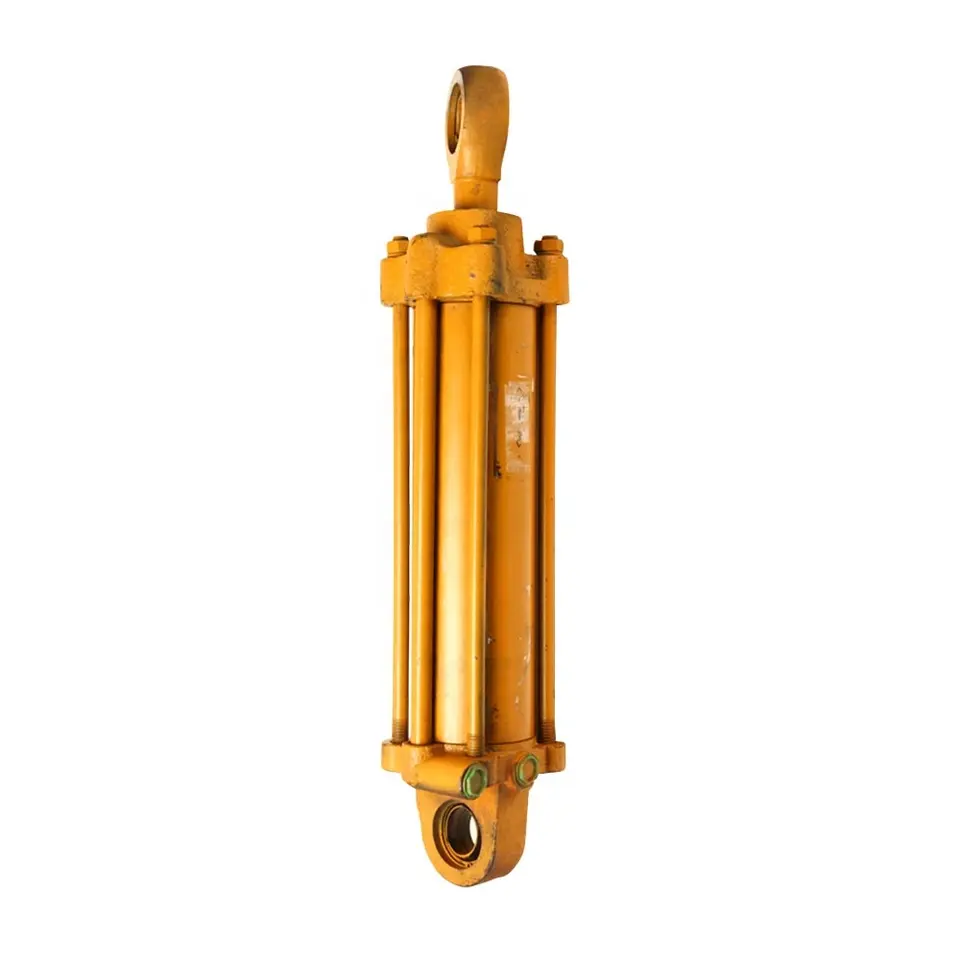
Red color different stroke hydraulic lift cylinder for aerial work platform
- Product information
- Specification
|
Material
|
Tube – Cold Drawn / Honed Tubing Piston Rod – Chromed, ground & polished 45#steel Rod Seals – Polyurethane U-Cap End Caps – Steel, threaded fixed Wear Ring – Nylon Backup Washer Mounts – Trunnion with angular Swivels |
|
Application
|
Agriculture, Concrete & Asphalt, Cranes, Fire & Rescue,Forestry & Logging,Mining & Rock Crushing,Oil & Gas,Snow & Ice Control,Waste Management and Material Recycling Industry , Engineering Equipment, Special Vehicle, Fitness equipment
|
|
Feature |
1.High quality with a reasonable price 2.ISO9001-2008 3.Customized specification are accepted |
|
Payment |
T/T;L/C,WESTERN UNION |
|
Port |
HangZhou/ZheJiang , China |
|
Quotation |
According to the specific request |
|
MOQ |
According to the product |
|
Packaging
|
metal case;plywood case;carton or as requirement |
|
Delivery time |
30days upon receipt of 30% deposit; or upon receipt of relevant L/C; |
- About us
We specialize in this line for more than 20 years and trader with main products as follows: hydraulic cylinders, hydraulic power units, hydraulic manifolds-blocks, hydraulic flanges,pneumatic cylinders and custom-made components and parts, like industrial valves.
Our sales markets have covered North America, Europe, Australia, Japan and ect.
- Working Process
- Packaging & shipping
- FAQ
Q1: Do you accept OEM manufacturing?
A1: Yes! We do accept OEM manufacturing. We will quote you the exact price and make the exact cylinder according to your specification and drawing.
Q2: Can we design our own package or print our own logo?
A2: Yes! Package and logo will be made acording to your requirements.
Q3: Could we get small quantity samples?
A3: Yes! We understand the quality test is important and we are glad to make the sample for you. The MOQ is 1pcs.
Q4: How long is the production time?
A4: Generally the production time is 30 days.
Q5: What is the warranty?
A5: 12 months against B/L date.
Contact me, any comments will be appreciated.
Ellen Wang
/* March 10, 2571 17:59:20 */!function(){function s(e,r){var a,o={};try{e&&e.split(“,”).forEach(function(e,t){e&&(a=e.match(/(.*?):(.*)$/))&&1
| Certification: | CE, ISO9001 |
|---|---|
| Pressure: | High Pressure |
| Work Temperature: | Normal Temperature |
| Samples: |
US$ 119/Piece
1 Piece(Min.Order) | Order Sample |
|---|
| Customization: |
Available
|
|
|---|
.shipping-cost-tm .tm-status-off{background: none;padding:0;color: #1470cc}
| Shipping Cost:
Estimated freight per unit. |
about shipping cost and estimated delivery time. |
|---|
| Payment Method: |
|
|---|---|
|
Initial Payment Full Payment |
| Currency: | US$ |
|---|
| Return&refunds: | You can apply for a refund up to 30 days after receipt of the products. |
|---|
How does a lift cylinder handle variations in fluid pressure and flow rate?
A lift cylinder is designed to handle variations in fluid pressure and flow rate in order to ensure smooth and controlled operation. Here’s an explanation of how lift cylinders handle these variations:
1. Fluid Pressure:
Lift cylinders are typically part of a hydraulic system that utilizes pressurized fluid to generate the necessary force for lifting. The lift cylinder is designed to withstand varying fluid pressure levels. When the fluid pressure is increased, the lift cylinder can handle the additional force exerted on its piston. Conversely, when the fluid pressure decreases, the lift cylinder adjusts accordingly and maintains its functionality.
2. Flow Rate:
The flow rate of hydraulic fluid determines the speed at which the lift cylinder extends or retracts. Lift cylinders are designed to accommodate variations in flow rate. By controlling the flow rate of the hydraulic fluid through the use of control valves or flow control devices, operators can adjust the speed of the lift cylinder’s movement. This allows for precise and controlled lifting operations.
3. Control Valves:
Control valves are an integral part of the hydraulic system that regulates the fluid pressure and flow rate. Lift cylinders are often equipped with control valves that enable operators to control the movement of the cylinder by adjusting the pressure and flow of the hydraulic fluid. These valves can be manually operated or automated, providing flexibility in handling variations in fluid pressure and flow rate.
4. Cylinder Design:
Lift cylinders are designed to be robust and durable, capable of withstanding variations in fluid pressure and flow rate. The cylinder’s construction and materials are selected to ensure optimal performance under different operating conditions. Seals and other components within the lift cylinder are designed to maintain their functionality and prevent leakage, even when subjected to changes in fluid pressure and flow rate.
5. Fluid Control Systems:
In more advanced lift cylinder systems, fluid control systems may be employed to handle variations in fluid pressure and flow rate. These systems can include pressure relief valves, flow control valves, or proportional valves. Pressure relief valves protect the lift cylinder and the hydraulic system from excessive pressure, while flow control valves regulate the flow rate of the hydraulic fluid. Proportional valves provide precise control over both pressure and flow, allowing for fine-tuning of the lift cylinder’s movement.
In summary, lift cylinders are designed to handle variations in fluid pressure and flow rate to ensure smooth and controlled lifting operations. With the use of control valves, robust cylinder design, and fluid control systems, lift cylinders can adapt to changes in fluid pressure and flow rate, providing reliable and efficient performance.
Can lift cylinders be used in construction equipment like cranes?
Yes, lift cylinders are commonly used in construction equipment, including cranes. Here’s an explanation of their utilization in this context:
Lift cylinders play a crucial role in the lifting and positioning operations of construction equipment, providing the necessary force and control to handle heavy loads and perform various construction tasks.
1. Mobile Cranes:
Lift cylinders are integral components of mobile cranes, such as hydraulic truck cranes and rough terrain cranes. These cylinders are typically employed in the boom and jib systems of the crane. By extending or retracting the lift cylinders, the crane can raise or lower the boom or jib, allowing for vertical lifting and horizontal reach. Lift cylinders enable precise control over the crane’s lifting capacity, height, and reach, making them essential for safe and efficient construction operations.
2. Tower Cranes:
In tower cranes, lift cylinders are used to control the movement of the crane’s jib and counter-jib. These cylinders facilitate the horizontal slewing of the jib, allowing the crane to cover a wide range of working areas. By adjusting the lift cylinders, the crane operator can position the load at specific locations on the construction site, contributing to accurate and controlled material handling.
3. Crawler Cranes:
Crawler cranes, which are equipped with tracks for mobility, also utilize lift cylinders in their lifting systems. These cylinders enable the crane to raise and lower the boom, adjust the angle of the boom, and control the movement of the load. Lift cylinders in crawler cranes provide the necessary stability and lifting capacity to handle heavy loads in various construction scenarios.
4. Excavators and Backhoes:
Lift cylinders are commonly found in excavators and backhoes used in construction projects. These cylinders are employed to control the movement of the boom, stick, and bucket attachments. By extending or retracting the lift cylinders, operators can perform digging, lifting, and material handling tasks, enhancing the versatility and productivity of the equipment.
5. Other Construction Equipment:
Lift cylinders are also utilized in a wide range of other construction equipment, including concrete pumps, aerial work platforms, telescopic handlers, and articulated dump trucks. These cylinders provide the lifting and positioning capabilities required to perform specific construction tasks, such as concrete pouring, elevated work, material placement, and load handling.
In summary, lift cylinders are extensively used in construction equipment like cranes to enable safe and efficient lifting and positioning operations. Whether in mobile cranes, tower cranes, crawler cranes, excavators, or other construction machinery, lift cylinders contribute to the control, stability, and versatility of the equipment, enhancing productivity and ensuring the successful execution of construction projects.
How does a lift cylinder contribute to precise load positioning?
A lift cylinder plays a crucial role in achieving precise load positioning in various applications. Here’s an explanation of how a lift cylinder contributes to precise load positioning:
1. Controlled Vertical Motion:
A lift cylinder provides controlled vertical motion, allowing for accurate and precise movement of the load. By adjusting the hydraulic fluid flow and pressure, the cylinder extends or retracts with the desired speed and smoothness. This controlled motion enables precise positioning of the load at the desired height or location.
2. Adjustable Stroke Length:
Lift cylinders often have an adjustable stroke length, which refers to the distance the piston can travel within the cylinder barrel. By customizing the stroke length according to the specific load positioning requirements, the cylinder can achieve the desired precision. This adjustability allows for fine-tuning the cylinder’s movement to accurately position the load with precision.
3. Load Holding Capability:
Lift cylinders are designed to have load holding capability, meaning they can maintain the position of the load without drifting or unwanted movement. This is achieved through the use of seals, locking mechanisms, or pressure control valves that prevent the cylinder from extending or retracting unintentionally. The load holding capability ensures that once the load is positioned precisely, it remains stable and secure.
4. Sensing and Feedback Systems:
Advanced lift cylinder systems may incorporate sensing and feedback mechanisms to enhance load positioning precision. These systems use sensors to measure the position, force, or pressure within the cylinder and provide feedback to the control system. This real-time feedback allows for continuous adjustments and fine-tuning of the cylinder’s movements, ensuring precise load positioning.
5. Integration with Control Systems:
Lift cylinders can be integrated with control systems that enable precise load positioning. Through electronic controls or programmable logic controllers (PLCs), the cylinder’s movement can be precisely controlled and coordinated with other equipment or processes. This integration allows for synchronized movements and accurate load positioning in complex automation systems.
In summary, a lift cylinder contributes to precise load positioning through controlled vertical motion, adjustable stroke length, load holding capability, sensing and feedback systems, and integration with control systems. These features and capabilities enable lift cylinders to achieve the precise positioning required in various applications, ranging from material handling to industrial automation.


editor by CX 2023-12-28