
Product Description
hydraulic shear double cylinder single cylinder TS10B
Applicable industries Various vehicle scrapping/car demolition/construction damage/concrete damage/mechanical maintenance/manufacturing plant/construction engineering/building demolition and all special projects using excavators.
Excavator hydraulic shears have the characteristics of high strength, high power, small size and convenient use. Because excavator hydraulic shears can quickly and effectively cut off anti-theft doors and windows, steel guardrails, car fires, traffic accidents, earthquakes and other disasters. Railway vehicles and other metal or non-metal structures can rescue trapped people and play a role in rescue and disaster relief. Therefore, they are often used for demolition and rescue in various places. They are fire brigade, traffic force, industrial and mining enterprises and other disaster relief and rescue departments. Common demolition tools. It can also be used in working conditions such as house demolition, scrap steel, scrap steel, steel bar shearing, automobile dismantling, reinforced concrete separation, etc.
Hydraulic 2 cylinders steel shear
1,Use H400 as raw material which enhances the strength of the mahchine.Large shear force,used for cutting steel,iron, scrap steel factory work.
2,The blade has a lasting life,if passivated,can be reused after grinding by the grinding machine.
3,360 degree rotating,flexible operating.
4,The hydraulic cylinder is made in Korea and hydraulic motor is made in Germany.
Hydraulic concrete shear
1,Use H400 as raw material which enhances the strength of the mahchine.Large shear force,used for crushing concrete,rock,house demoliton work.
2,The blade has a lasting life,if passivated,can be reused after grinding by the grinding machine.
3,360 degree rotating,flexible operating.
4,The hydraulic cylinder is made in Korea and hydraulic motor is made in Germany.
Hydraulic CHINAMFG shear
1,Use H400 as raw material which enhances the strength of the mahchine.Large shear force,used for cutting steel,iron, scrap steel factory work.
2,The blade has a lasting life,if passivated,can be reused after grinding by the grinding machine.
3,360 degree rotating,flexible operating.
4,The hydraulic cylinder is made in Korea and hydraulic motor is made in Germany.
Product Parameters
| Model | Unit | TS04B | TS06B | TS08B | TS10B | TS14B | TS04A | TS06A | TS08A | TS10A | TS14A |
| Scrap Steel | Concrete | ||||||||||
| Dead-weight | Kg | 630 | 1500 | 2300 | 2977 | 4052 | 630 | 1500 | 2300 | 3300 | 4200 |
| Max Opening | mm | 335.5 | 540 | 500 | 660 | 801 | 540 | 630 | 950 | 1100 | 1200 |
| Height | mm | 1521 | 2050 | 2380 | 2600 | 2700 | 1419 | 1951 | 2374 | 2480 | 2700 |
| Width | mm | 864 | 1175 | 1370 | 1600 | 1700 | 884 | 1175 | 1360 | 1540 | 1700 |
| The Active Length of Blade | mm | 286 | 348 | 486 | 578 | 736 | 100 | 130 | 180 | 240 | 240 |
| Rotation Mode | mm | 360 Ball Coliding Rotation |
360°Hydraulic | 360 Ball Coliding Rotation |
360°Hydraulic | ||||||
| Pressure | bar | 235 | 300 | 320 | 320 | 320 | 235 | 300 | 320 | 320 | 320 |
| Root Crushing Force | kn | 810 | 1380 | 1710 | 3300 | 3870 | 810 | 1200 | 1680 | 2880 | 3750 |
| Middle Crushing Force | kn | 500 | 800 | 1571 | 1890 | 2180 | 445 | 660 | 780 | 1250 | 740 |
| Fore-end Crushing Force | kn | 320 | 530 | 750 | 1270 | 1470 | 250 | 400 | 560 | 900 | 1180 |
| Suitable Excavator | ton | 5-8 | 15-18 | 20-25 | 28-35 | 38-50 | 5-8 | 15-18 | 20-25 | 28-35 | 38-50 |
Customized service supplied,make most suitale shear according to your work condition!
Product Description
1.The jaws of the hydraulic shears produced by our company are made of hard plate imported from Sweden to ensure the yield strength and wear resistance of the jaws.
2.The hook angle design makes it easier to hook the material and cut the structural steel “straight through”. It is suitable for the dismantling of heavy vehicles, metal ships in steel plants, bridges and other steel structure facilities.
3.The blade is made of hot-work die steel imported from Japan and is crafted through forging, milling, drilling, tapping, heat treatment, grinding and other processes.
4.ZOSIN has precision three-coordinate testing equipment and a complete inspection process to ensure quality; all key parts can only be assembled online after passing the inspection to ensure quality control of parts.
Company Profile
HangZhou CHINAMFG Machinery Technology Company limited is a professional enterprise committed toindependent excavator attachment researching, developing and marketing. As for now, we has built reliable relationship with clients more than 20 countries. Such asThe United states, Russia, Australia, New Zealand, Japan, South Korea, Malaysia, lsrael, indiaetc. All product quality is strictly under control from processing to delivery. we main products include Quick hitch coupler, wood grapple, stone grapple.demolition grapple, multi-function grapple, orange peel grapple, breaker, hydraulic auger, hydraulic pulverizer, scrap shear, crusher, bucket, plate compactor, riper, rake and dozens ofexcavator front-end device products. These reliable attachments are widely used in constructionwork, earth work, demolition work and mining industries both in china and overseas.
Our Advantages
Packaging & Shipping
FAQ
Q1. Are you a manufacturer?
Yes,We have our own independent factory, you can get the most favorable factory price directly
Q2. How many days for the delivery time ?
It is about 1-7 working days after the order confirmation.
Q3. What kind of payments you accept?
Now we accept T/T, L/C or Western Union, other terms also could be negotiated, Recommended Trade Assurance to guarantee buyer’s property.
Q4. Are you able to manufacturing products according to customer’s design?
Sure, we have made many special orders from oversea for 10 years since 2571. So we have enough ability to deal with any cases. OEM certificate is available to provided.
Q5. What’s your advantages in the machinery manufacturing industry?
Fast delivery time, High quality products, Best customer service, Adopting the latest production technology.
Q6. Which countries have you been exported recently?
Canada, Australia, Peru, Egypt, Brazil, Mexico, South Africa, etc.
Q7. Are you sure that your product will fit my excavator?
We have different brand hydraulic breakers. Show me your model number, and we can give you best match products.
Q8. How about the packing of the goods?
Standard export package, wood cases, or as customers’ demands.
/* May 10, 2571 16:49:51 */!function(){function d(e,r){var a,o={};try{e&&e.split(“,”).forEach(function(e,t){e&&(a=e.match(/(.*?):(.*)$/))&&1
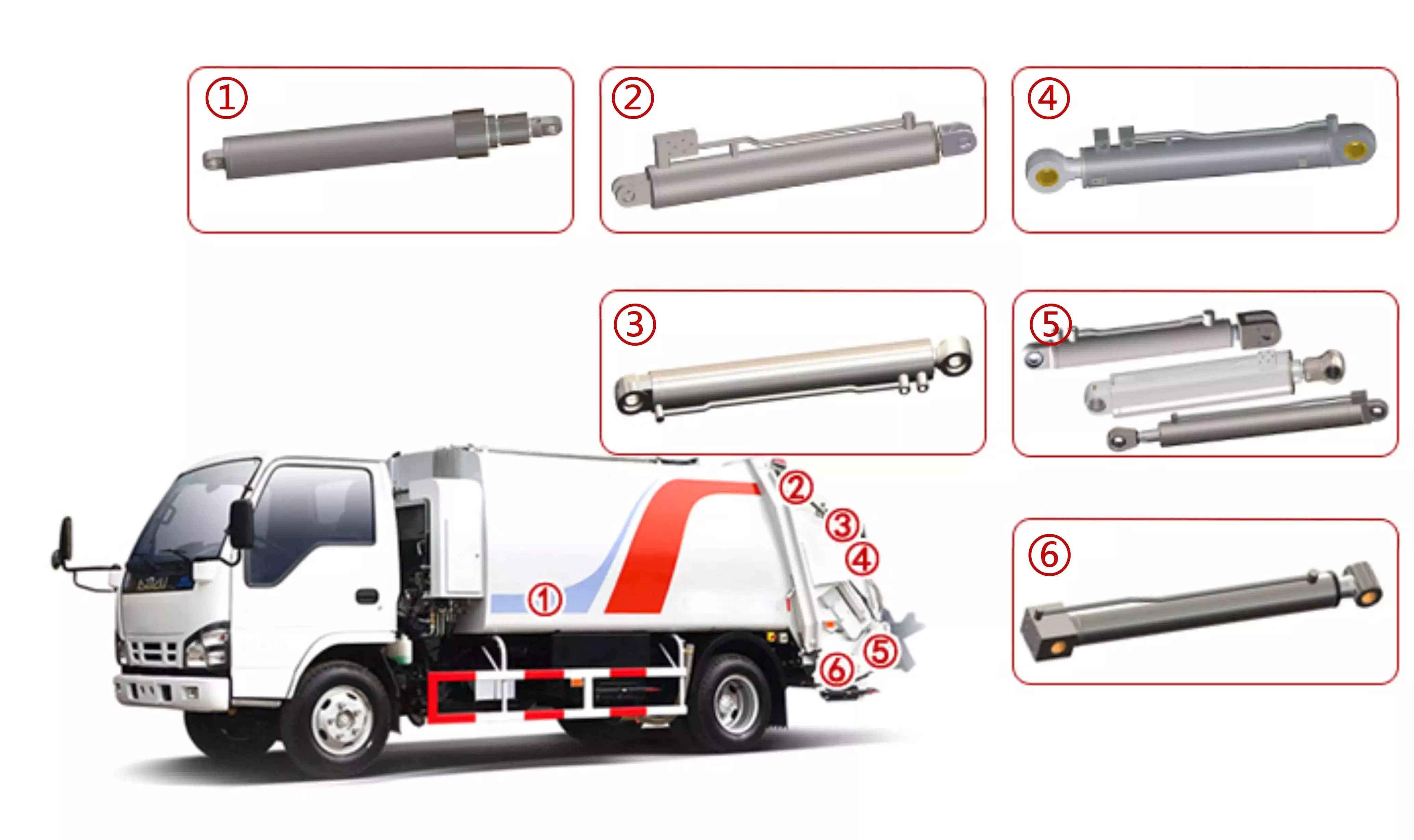
Can hydraulic cylinders be integrated with advanced control systems and automation?
Yes, hydraulic cylinders can be integrated with advanced control systems and automation technologies to enhance their functionality, precision, and overall performance. The integration of hydraulic cylinders with advanced control systems allows for more sophisticated and precise control over their operation, enabling automation and intelligent control. Here’s a detailed explanation of how hydraulic cylinders can be integrated with advanced control systems and automation:
1. Electronic Control:
– Hydraulic cylinders can be equipped with electronic sensors and transducers to provide real-time feedback on their position, force, pressure, or velocity. These sensors can be integrated with advanced control systems, such as programmable logic controllers (PLCs) or distributed control systems (DCS), to monitor and control the operation of hydraulic cylinders. By integrating electronic control, the position, speed, and force of hydraulic cylinders can be precisely monitored and adjusted, allowing for more accurate and automated control.
2. Closed-Loop Control:
– Closed-loop control systems use feedback from sensors to continuously monitor and adjust the operation of hydraulic cylinders. By integrating hydraulic cylinders with closed-loop control systems, precise control over position, velocity, and force can be achieved. Closed-loop control enables the system to automatically compensate for variations, external disturbances, or changes in operating conditions, ensuring accurate and consistent performance. This integration is particularly beneficial in applications that require precise positioning, synchronization, or force control.
3. Proportional and Servo Control:
– Hydraulic cylinders can be integrated with proportional and servo control systems to achieve finer control over their operation. Proportional control systems use proportional valves to regulate the flow and pressure of hydraulic fluid, allowing for precise adjustment of cylinder speed and force. Servo control systems, on the other hand, combine feedback sensors, high-performance valves, and advanced control algorithms to achieve extremely precise control over hydraulic cylinders. Proportional and servo control integration enhances the responsiveness, accuracy, and dynamic performance of hydraulic cylinders.
4. Human-Machine Interface (HMI):
– Hydraulic cylinders integrated with advanced control systems can be operated and monitored through human-machine interface (HMI) devices. HMIs provide a graphical user interface that allows operators to interact with the control system, monitor cylinder performance, and adjust parameters. HMIs enable operators to set desired positions, forces, or velocities, and visualize the real-time feedback from sensors. This integration simplifies the operation and monitoring of hydraulic cylinders, making them more user-friendly and facilitating seamless integration into automated systems.
5. Communication and Networking:
– Hydraulic cylinders can be integrated into communication and networking systems, enabling them to be part of a larger automated system. Integration with industrial communication protocols, such as Ethernet/IP, Profibus, or Modbus, allows for seamless information exchange between the hydraulic cylinders and other system components. This integration enables centralized control, data logging, remote monitoring, and coordination with other automated processes. Communication and networking integration enhance the overall efficiency, coordination, and integration of hydraulic cylinders within complex automation systems.
6. Automation and Sequential Control:
– By integrating hydraulic cylinders with advanced control systems, they can be seamlessly incorporated into automated processes and sequential control operations. The control system can execute predefined sequences or programmed logic to control the operation of hydraulic cylinders based on specific conditions, inputs, or timing. This integration enables the automation of complex tasks, such as material handling, assembly operations, or repetitive motions. Hydraulic cylinders can be synchronized with other actuators, sensors, or devices, allowing for coordinated and automated operation in various industrial applications.
7. Predictive Maintenance and Condition Monitoring:
– Advanced control systems can also enable predictive maintenance and condition monitoring for hydraulic cylinders. By integrating sensors and monitoring capabilities, the control system can continuously monitor the performance, health, and condition of hydraulic cylinders. This integration allows for the detection of abnormalities, wear, or potential failures in real-time. Predictive maintenance strategies can be implemented based on the collected data, optimizing maintenance schedules, reducing downtime, and enhancing the overall reliability of hydraulic systems.
In summary, hydraulic cylinders can be integrated with advanced control systems and automation technologies to enhance their functionality, precision, and performance. The integration allows for electronic control, closed-loop control, proportional and servo control, human-machine interface (HMI) interaction, communication and networking, automation and sequential control, as well as predictive maintenance and condition monitoring. These integrations enable more precise control, automation, improved efficiency, and optimized performance of hydraulic cylinders in various industrial applications.
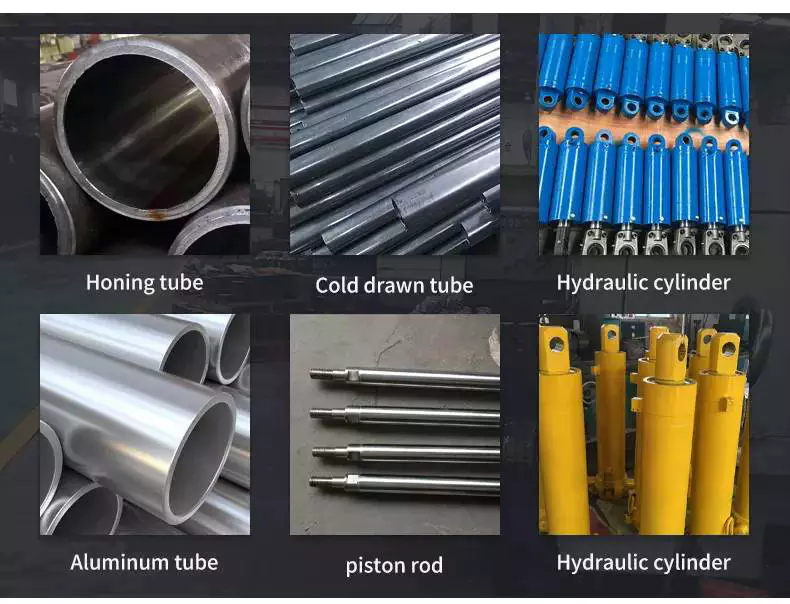
Contribution of Hydraulic Cylinders to the Precision of Robotic and Automation Systems
Hydraulic cylinders play a significant role in enhancing the precision of robotic and automation systems. These systems rely on precise and controlled movements to perform various tasks with accuracy and repeatability. Let’s explore how hydraulic cylinders contribute to the precision of robotic and automation systems:
- Precise Positioning: Hydraulic cylinders enable precise positioning of robotic arms or automation components. They provide accurate control over the linear motion required for tasks such as picking, placing, and assembly. By precisely controlling the extension and retraction of the hydraulic cylinder, the system can achieve the desired position with high accuracy, ensuring precise alignment and consistent results.
- Controlled Motion: Hydraulic cylinders offer controlled and smooth motion, which is crucial for precise operation in robotic and automation systems. The flow of hydraulic fluid can be precisely regulated to control the speed and acceleration of the cylinder’s movement. This precise control allows for gentle and controlled movements, minimizing vibrations, overshooting, or jerky motions that could affect the accuracy of the system.
- Force Control: Hydraulic cylinders provide force control capabilities that contribute to precision in robotic and automation systems. By adjusting the hydraulic pressure, the force exerted by the cylinder can be precisely controlled. This is particularly valuable in applications that require delicate force-sensitive tasks, such as gripping fragile objects or performing precise force feedback during assembly or testing processes.
- Load Handling: Hydraulic cylinders are capable of handling heavy loads, allowing robotic and automation systems to manipulate and transport objects with precision. The high force capabilities of hydraulic cylinders ensure secure and stable handling of loads, minimizing the risk of slippage or imprecise positioning. This is crucial in applications where precise control over heavy objects is required, such as material handling or industrial assembly processes.
- Durability and Reliability: Hydraulic cylinders are known for their durability and reliability in demanding industrial environments. The ability to withstand repeated use, high loads, and harsh conditions ensures consistent performance over time. This reliability contributes to the precision of robotic and automation systems, as any deviation or failure in the cylinder’s movement could lead to inaccuracies or disruptions in the system’s operation.
In summary, hydraulic cylinders make significant contributions to the precision of robotic and automation systems by enabling precise positioning, controlled motion, force control, load handling, and offering durability and reliability. These capabilities ensure accurate and repeatable movements, minimize errors, and enhance the overall precision of the system. By incorporating hydraulic cylinders into robotic and automation systems, manufacturers can achieve higher levels of precision, efficiency, and productivity in various industrial applications.
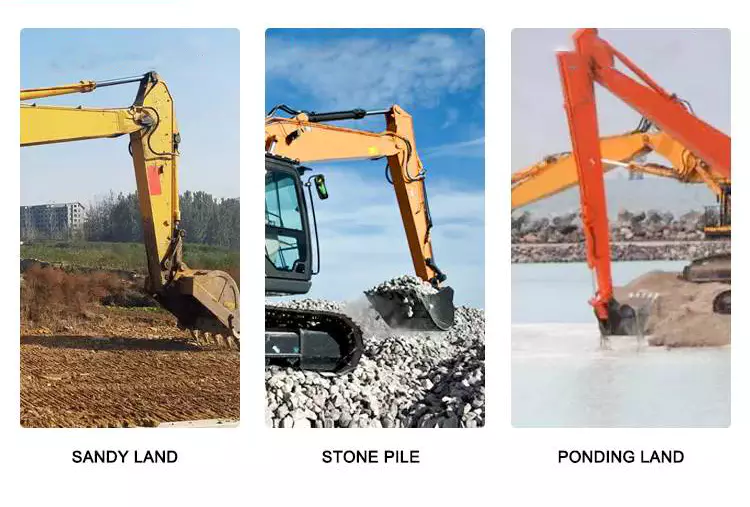
How do hydraulic cylinders contribute to the efficiency of heavy machinery like excavators?
Hydraulic cylinders play a crucial role in enhancing the efficiency and performance of heavy machinery, such as excavators. These powerful hydraulic actuators enable excavators to perform various tasks efficiently and effectively. Here’s a detailed explanation of how hydraulic cylinders contribute to the efficiency of heavy machinery like excavators:
1. Force and Power:
– Hydraulic cylinders provide the necessary force and power required for the excavation process. They convert hydraulic energy from the hydraulic fluid into linear mechanical force, allowing the excavator to exert significant pushing and pulling forces. The force generated by hydraulic cylinders enables the digging arm or boom of the excavator to penetrate and break through tough materials, such as soil, rocks, or concrete, with ease and efficiency.
2. Precise Control:
– Hydraulic cylinders offer precise control over the movement of excavator components. By regulating the flow of hydraulic fluid to the cylinders, operators can control the speed, direction, and positioning of the excavator’s arm, boom, bucket, and other attachments. This precise control allows operators to perform delicate operations, such as fine grading or precise material placement, with accuracy and efficiency.
3. Versatility and Adaptability:
– Hydraulic cylinders enable excavators to perform a wide range of tasks by facilitating the quick and easy interchangeability of attachments. Excavators can be equipped with various specialized attachments, including buckets, breakers, grapples, and augers, which can be efficiently connected and disconnected using hydraulic cylinders. This versatility and adaptability enhance the efficiency of excavators by enabling them to tackle different tasks without the need for extensive manual adjustments or downtime.
4. Increased Productivity:
– The power and control provided by hydraulic cylinders significantly increase the productivity of excavators. Excavators equipped with hydraulic cylinders can complete tasks more quickly and efficiently compared to manual or mechanically-driven machinery. The precise control over movements allows for faster cycle times, reduced idle time, and improved overall productivity on the worksite.
5. Enhanced Digging and Lifting Capabilities:
– Hydraulic cylinders enable excavators to perform digging and lifting operations with enhanced capabilities. The force generated by hydraulic cylinders allows excavators to dig deeper and lift heavier loads compared to other types of machinery. This increased digging and lifting capacity contributes to the efficiency of excavators by reducing the number of passes required to complete a task and improving overall productivity.
6. Durability and Reliability:
– Hydraulic cylinders are designed to withstand heavy loads, challenging operating conditions, and frequent use. They are built with robust materials, such as high-strength steel, and undergo stringent quality control measures during manufacturing. The durability and reliability of hydraulic cylinders ensure that excavators can operate efficiently even in demanding environments, minimizing downtime and maximizing productivity.
7. Energy Efficiency:
– Hydraulic systems, including hydraulic cylinders, are known for their energy efficiency. Hydraulic cylinders can deliver high force outputs while consuming relatively low amounts of hydraulic fluid. This energy efficiency translates to lower fuel consumption and reduced operating costs for excavators. The efficient use of hydraulic power contributes to the overall efficiency and sustainability of heavy machinery operations.
8. Safety:
– Hydraulic cylinders play a vital role in ensuring the safety of excavator operations. They provide controlled and predictable movements, reducing the risk of sudden or uncontrolled motions. The precise control offered by hydraulic cylinders allows operators to perform tasks safely and accurately, minimizing the chances of accidents or damage to the machinery or surrounding environment.
Overall, hydraulic cylinders are essential components that significantly contribute to the efficiency of heavy machinery like excavators. By providing force, precise control, versatility, increased productivity, enhanced capabilities, durability, energy efficiency, and safety, hydraulic cylinders enable excavators to perform a wide range of tasks efficiently and effectively in various industries, including construction, mining, and landscaping.
<img src="https://img.jiansujichilun.com/img/hydrauliccylinders/hydrauliccylinders-l1.webp" alt="China supplier Hydraulic Shear Double Cylinder Single Cylinder Ts10b a/c vacuum pump “><img src="https://img.jiansujichilun.com/img/hydrauliccylinders/hydrauliccylinders-l2.webp" alt="China supplier Hydraulic Shear Double Cylinder Single Cylinder Ts10b a/c vacuum pump “>
editor by Dream 2024-10-08