
Product Description
Economical Custom Design 22kg hydraulic Forklift Tilt Cylinder 18.1MPa
A tilt cylinder in a forklift is a hydraulic component that enables the mast and forks tilting motion. It allows the operator to adjust the angle of the forks to accommodate different load-handling requirements.
| bore diameter (D) | rod diameter (d) | stroke (S) | Installation distance (L) | working pressure | Interface dimensions (M) | weight |
| Φ100 | Φ40 | 193 | 498 | 18.1MPa | 2-M16*1.5 | 22kg |
(1) Our company can customize non-standard oil cylinders within the range of cylinder diameter D360MM and stroke L6000MM according to customer requirements;
(2) The above product prices are nontax unit prices, excluding packaging and transportation costs required for the export
Here are some key points about the tilt cylinder in a forklift:
-
Function: The tilt cylinder controls the tilting movement of the mast and forks. It allows the operator to tilt the forks CHINAMFG or backward, enabling efficient lifting, transporting, and depositing of loads.
-
Hydraulic Power: The tilt cylinder relies on the forklift’s hydraulic system for power. When the operator activates the tilt control lever, hydraulic fluid is directed to the tilt cylinder, causing it to extend or retract and initiate the tilting motion.
-
Construction: Forklift tilt cylinders are typically double-acting hydraulic cylinders. They consist of a cylindrical barrel, a piston rod, and seals to prevent fluid leakage. The cylinder is mounted on the forklift’s mast and connected to the carriage or tilting mechanism. The piston rod extends and retracts within the cylinder barrel, allowing the mast and forks to tilt.
-
Control: The operator controls the tilt cylinder using a control lever or joystick located in the forklift’s operator compartment. By manipulating the control lever, the operator can activate the hydraulic system to extend or retract the tilt cylinder, thereby adjusting the tilt angle of the forks.
-
Safety Features: Forklifts are equipped with safety features related to the tilt cylinder operation. These may include tilt speed control, load backrests, and tilt lock mechanisms to prevent unintentional tilting or ensure the forks remain fixed during transport.
-
Maintenance: Regular maintenance and inspection of the tilt cylinder are essential to ensure its proper functioning. This includes checking for leaks, verifying the condition of seals, and maintaining the hydraulic fluid at the recommended level and quality. Any signs of damage or malfunction should be addressed promptly to prevent equipment downtime and ensure safe operation.
How To Maintain Tilt Cylinder Forklift?
-
Regular Inspection: Regularly visually inspect the tilt cylinder to identify any signs of damage, wear, or leaks. Look for fluid leaks around the cylinder, damaged seals, or dents or cracks in the cylinder barrel or piston rod. If any issues are detected, they should be addressed promptly.
-
Lubrication: Follow the manufacturer’s recommendations for lubrication of the tilt cylinder. Some cylinders may require periodic greasing or lubrication at specific points. Ensure that the lubricant is compatible with the cylinder’s materials and seals.
-
Hydraulic Fluid: Monitor the hydraulic fluid level and quality. Check the liquid status regularly and top it up as needed. Inspect the hydraulic fluid for contamination, such as dirt, debris, or water. If the fluid appears contaminated or has been used for an extended period, consider replacing it according to the manufacturer’s guidelines.
-
Seals and Gaskets: Inspect the seals and gaskets of the tilt cylinder for any signs of wear, damage, or leakage. Replace any worn or damaged seals promptly to prevent fluid leaks and ensure the proper functioning of the cylinder.
-
Operation and Safety: Train operators on proper forklift operation techniques, including correctly using the tilt cylinder. Encourage operators to avoid excessive or abrupt tilting motions, as they can strain the cylinder and other components. Also, ensure that the forklift’s safety features related to the tilt cylinder, such as tilt speed control or lock mechanisms, function correctly.
-
Professional Maintenance: Schedule regular maintenance by trained technicians or follow the recommended maintenance intervals provided by the forklift manufacturer. Professional care can include more in-depth inspections, testing of hydraulic pressures, and overall system checks to ensure the tilt cylinder is operating as intended.
-
Documentation: Maintain records of maintenance activities performed on the tilt cylinder. This helps track maintenance history, identify recurring issues, and perform maintenance at the recommended intervals.
Our Company
We have a first-class independent R&D platform for assembly. The forklift cylinder production workshop has 4 semi-automatic lifting cylinder assembly lines and 1 fully automatic tilting cylinder assembly line, with a designed annual production capacity of 1 million pieces; the special cylinder workshop is equipped with semi-automatic cleaning and assembly systems of various specifications, with a designed annual production capacity of 200,000 essays. It has famous CNC machining equipment, machining centers, special equipment for high-precision cylinder processing, robot welding machines, automatic cleaning machines, automatic cylinder assembly machines, and automatic paint production lines. We have more than 300 sets of critical equipment running. The optimized allocation and efficient utilization of equipment resources ensure the precision requirements of the products and meet the high standard quality requirements of the products.
|
Forklift cylinder assembly shop |
Other types of cylinder assembly shop |
Welding
Painting & coating
|
Painting & coating line |
Fully automatic water-based |
Testing
To further improve product performance, and establish the leadership position of our hydraulic cylinder in the industry, our company and zjimee jointly established a Comprehensive performance laboratory of hydraulic cylinders, hydraulic valves, and hydraulic pumps; the lab is computer-assisted testing, using electro-hydraulic control technology, the test conditions preset by computer, which improves the test accuracy and system versatility, and the experimental data.
The automatic collection is realized through the application of sensors, and the output data, such as the internal leakage and load efficiency of the cylinder or the valve, are directly processed by the
computer and converted to standard units (ml/min; %). At the same time, to ensure the working safety of the hydraulic system, the state monitoring function is carried out for key performance parameters, such as “oil temperature monitoring, liquid level monitoring, filter device monitoring,” etc. Among them, the hydraulic cylinder test stand can test the performance of “load efficiency” and “internal leakage” by readings. At the same time, it is equipped with a grating ruler measuring instrument, which meets the requirements of all test items of hydraulic cylinder products in the national standard
Our Factory
Packaging & Shipping
/* March 10, 2571 17:59:20 */!function(){function s(e,r){var a,o={};try{e&&e.split(“,”).forEach(function(e,t){e&&(a=e.match(/(.*?):(.*)$/))&&1
| Certification: | GS, RoHS, CE, ISO9001 |
|---|---|
| Pressure: | Medium Pressure |
| Work Temperature: | Normal Temperature |
| Acting Way: | Double Acting |
| Working Method: | Rotary |
| Adjusted Form: | Regulated Type |
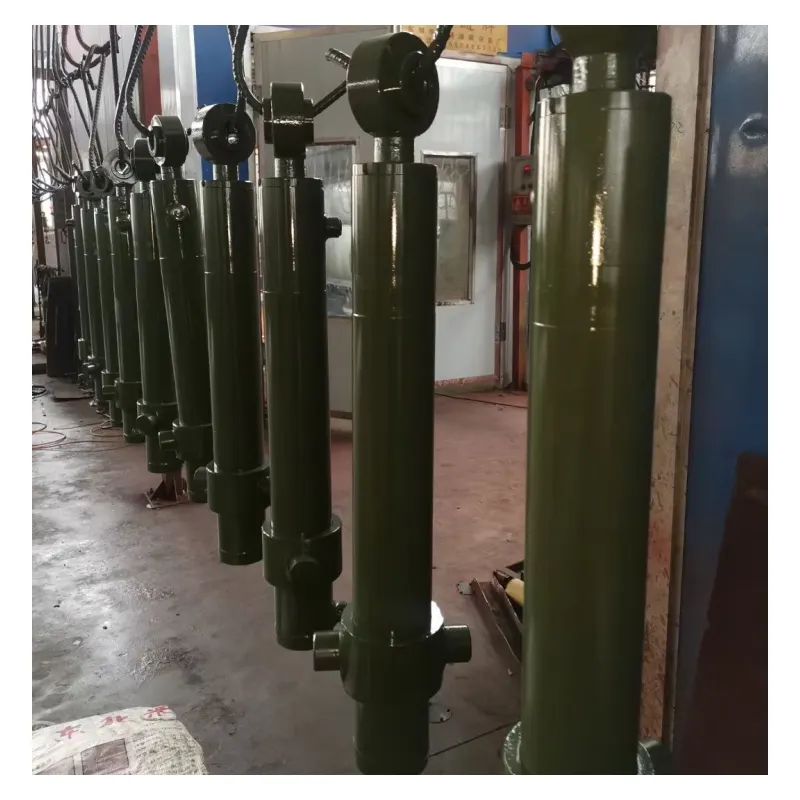
Can hydraulic cylinders be used in rough terrain forklifts?
Yes, hydraulic cylinders can be used in rough terrain forklifts. Hydraulic systems, including hydraulic cylinders, are an essential component of rough terrain forklifts and play a crucial role in their operation. Here’s an explanation of their use:
Rough terrain forklifts are specifically designed to operate in challenging outdoor environments, such as construction sites, lumber yards, and agricultural settings. These forklifts are equipped with features that allow them to navigate uneven terrain, slopes, and other rough surfaces. Hydraulic cylinders are integral to their performance in the following ways:
1. Lifting Functionality:
The hydraulic cylinder in a rough terrain forklift is responsible for lifting and lowering the load-carrying forks. It provides the necessary force to elevate heavy loads to the desired height. The hydraulic system allows precise control over the lifting speed and positioning, enabling efficient material handling even on rough and uneven surfaces.
2. Suspension System:
Rough terrain forklifts are equipped with a suspension system that helps absorb shocks and vibrations during operation. Hydraulic cylinders are often used as part of the suspension system to provide damping and improve ride comfort. These cylinders help cushion the impact of uneven terrain, reducing the transfer of vibrations to the forklift and the load being carried.
3. Stability and Balance:
Hydraulic cylinders contribute to the stability and balance of rough terrain forklifts. They are used to control the extension and retraction of the mast assembly, which supports the forks and the load. By adjusting the mast height and angle, the cylinders help maintain stability and balance, especially when operating on slopes or uneven ground.
4. Steering and Maneuverability:
Some rough terrain forklifts utilize hydraulic cylinders in their steering mechanisms. These cylinders assist in turning and maneuvering the forklift, allowing it to navigate through tight spaces and negotiate obstacles on rough terrain. The hydraulic system provides the necessary power and control for smooth and precise steering operations.
Overall, hydraulic cylinders are essential components of rough terrain forklifts. They enable the lifting functionality, contribute to the suspension system for improved ride comfort, help maintain stability and balance, and assist in steering and maneuverability. By utilizing hydraulic power, these forklifts can effectively handle the challenges of rough outdoor environments and ensure efficient material handling operations.
In summary, hydraulic cylinders are indeed used in rough terrain forklifts. Their presence in these forklifts enables reliable lifting, enhances stability and balance, improves ride comfort through suspension systems, and assists in steering and maneuverability on uneven surfaces. The use of hydraulic technology is instrumental in achieving optimal performance and productivity in rough terrain applications.
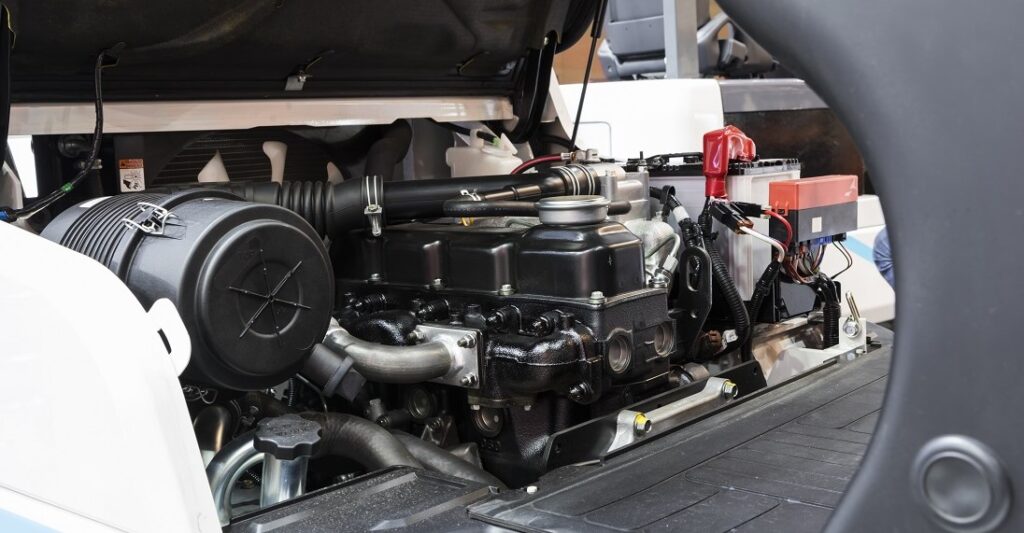
Can hydraulic cylinders be used in heavy-duty construction forklifts?
Yes, hydraulic cylinders can be used in heavy-duty construction forklifts. Heavy-duty construction forklifts are specifically designed to handle large loads and operate in rugged construction sites. Hydraulic cylinders play a crucial role in the functionality and performance of these robust forklifts. Here’s an explanation of how hydraulic cylinders are used in heavy-duty construction forklifts:
Hydraulic cylinders are utilized in heavy-duty construction forklifts in the following ways:
1. Lifting Capacity:
The primary function of hydraulic cylinders in heavy-duty construction forklifts is to provide the lifting capacity required to handle heavy loads. These cylinders are designed to generate substantial force, enabling the forklift to lift and transport large construction materials, equipment, and machinery.
2. Mast Movement:
Hydraulic cylinders control the vertical movement of the mast in heavy-duty construction forklifts. The mast can be raised or lowered using hydraulic power, allowing for efficient loading, unloading, and stacking of heavy materials at various heights.
3. Fork Movement:
Hydraulic cylinders are responsible for controlling the horizontal movement of the forks in heavy-duty construction forklifts. These cylinders allow the forks to extend or retract, enabling the forklift to adapt to different load sizes and effectively handle a variety of construction materials.
4. Tilt Function:
Hydraulic cylinders are used for the tilt function in heavy-duty construction forklifts. The cylinders control the tilting mechanism, allowing the operator to adjust the angle of the mast or carriage. This feature is particularly useful for positioning loads on uneven surfaces or for precise material placement.
5. Stability and Safety:
Hydraulic cylinders contribute to the stability and safety of heavy-duty construction forklifts. These cylinders are designed to withstand heavy loads and maintain stability during lifting, lowering, and movement operations. Additionally, safety features such as load sensing valves and overload protection systems are often integrated into the hydraulic system to ensure safe operation in demanding construction environments.
6. Operator Control:
Heavy-duty construction forklifts incorporate hydraulic controls that allow the operator to manipulate the hydraulic cylinders. The operator can adjust the lifting, lowering, tilting, and fork movements using the hydraulic controls, providing precise and efficient load handling.
In summary, hydraulic cylinders are essential components in heavy-duty construction forklifts. They provide the necessary lifting capacity, control the mast and fork movements, enable the tilt function, ensure stability and safety, and offer operator control. These hydraulic cylinders enable heavy-duty construction forklifts to effectively handle large loads and operate in challenging construction environments.
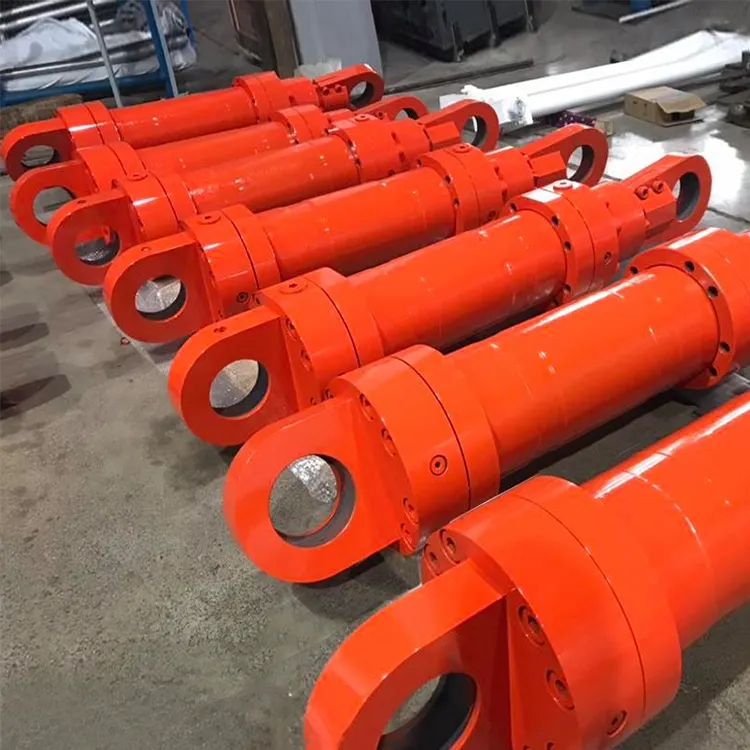
What are the Safety Considerations When Using Forklifts with Hydraulic Cylinders?
When using forklifts with hydraulic cylinders, it is essential to prioritize safety to prevent accidents, injuries, and property damage. Hydraulic systems and cylinders are integral components of forklifts, and understanding and implementing safety considerations is crucial. Here are important safety considerations to keep in mind:
- Operator Training and Certification:
- Regular Inspections and Maintenance:
- Load Capacity and Stability:
- Proper Load Positioning and Handling:
- Avoiding Overextension and Collisions:
- Proper Use of Controls:
- Clear Communication and Awareness:
- Emergency Procedures:
Operators must receive thorough training and certification specific to forklift operations. Proper training should cover the safe operation of hydraulic systems and cylinders, including understanding the controls, load capacity, stability, and safe maneuvering techniques. Well-trained operators are more likely to handle hydraulic cylinders safely and minimize the risk of accidents or misuse.
Forklifts and their hydraulic systems, including cylinders, should undergo regular inspections and maintenance to ensure they are in proper working condition. Inspections should identify any signs of wear, leaks, or damage, and maintenance tasks such as lubrication and component replacements should be performed as recommended by the manufacturer. Well-maintained hydraulic cylinders contribute to safe and reliable forklift operations.
Understanding and adhering to the forklift’s load capacity limitations is crucial for safe operation. Overloading a forklift can lead to instability and potential tip-overs. Operators should be aware of the load capacity rating and ensure that loads are properly balanced and secured. Maintaining the forklift’s stability, especially when using the hydraulic cylinder to lift or lower loads, is essential to prevent accidents caused by tipping or loss of control.
Safe load positioning and handling contribute to overall forklift safety. Operators should ensure that loads are positioned correctly on the forks, centered and secure, to prevent them from shifting or falling during transport. When using the hydraulic cylinder to raise or lower loads, operators should do so gradually and avoid sudden movements that may destabilize the forklift or cause the load to swing uncontrollably.
Overextending the hydraulic cylinder beyond its recommended limits can lead to failure or instability. Operators should be aware of the maximum extension and retraction limits of the cylinder and avoid exceeding them. Additionally, operators must exercise caution to prevent collisions with objects or structures, as impacts can damage the hydraulic cylinder, compromise its integrity, and pose safety risks.
Operators should be familiar with the forklift’s hydraulic control system and use the controls properly. This includes understanding the functions of each control, such as raising, lowering, tilting, or extending the forks, and using them with precision and care. Mishandling the hydraulic controls can result in sudden movements or unintended actions, potentially causing accidents or injuries.
Clear communication and situational awareness are essential for safe forklift operations. Operators should maintain clear visibility, use mirrors or cameras if available, and be aware of their surroundings to avoid collisions with pedestrians, other vehicles, or obstacles. Effective communication with co-workers and signaling to indicate forklift movements can help prevent accidents and ensure a safe working environment.
Operators should be familiar with emergency procedures and know how to respond in case of malfunctions, leaks, or other emergencies involving the hydraulic cylinder. Proper training should cover emergency shutdown procedures, reporting protocols, and evacuation plans to ensure a timely and coordinated response that minimizes risks to personnel and property.
By prioritizing operator training, regular inspections, adherence to load capacity limits, proper load handling, cautious control usage, and clear communication, forklifts with hydraulic cylinders can be operated safely and efficiently. Implementing these safety considerations helps reduce the risk of accidents, protect personnel, and maintain a secure work environment.


editor by CX 2024-01-24