
Product Description
DESCRIPTION
Hydraulic scissor hoist kit for Tipper trailer/Dump truck
Hydraulic scissor hoist kit
Application: Tipper trailer, dump truck etc.
Load capacity: 1-10 tons
Complete kit including 1 set hoist frame, 1 pc hydraulic
cylinder, 1 set hydraulic power unit, 2 pcs hoses and connectors.
PS: We can also provide the Hinges, Safety Arm, Battery Cables, Rubber Battery Strap.
Hoist Mechanism,Dimensions & Mass(appros.)
| L(mm) | W(mm) | H(mm) | X(mm) | MASS(kg) |
| 1180 | 402 | 340 | 391 | 120 |
|
Model |
Recommended Gross Vehicle Mass |
Cabin Length |
Rear overhang length | Distance between load centre and hinge | Distance between trunnion and height | Rated lifting capacity | Design maximum lifting capacity and angle |
| KRM92-1 | 4000-5000 | 3100 | 340 | 1210 | 1270 | 2000-3000 | 60/5500 |
| KRM200-48 | 28000-35000 | 8000 | 1000 | 2000 | 3380 | 18000-25000 | 53/35000 |
| KRM143B | 6000-9000 | 3400 | 400 | 1300 | 1100 | 4000-5000 | 60/8500 |
| KRM160C | 11000-17000 | 4500 | 750 | 1500 | 2050 | 6000-8000 | 52/16000 |
| KRM160S | 8000-11000 | 3800 | 600 | 1300 | 1400 | 6000-8000 | 52/11000 |
| KRM220 | 20000-39000 | 8000 | 1200 | 3000 | 3630 | 20000-29000 | 47/39000 |
| KRM183 | 21000-29000 | 5300 | 900 | 1750 | 2480 | 15000-17000 | 53/27000 |
Hoist Cylinder and Pump Combination Specification (approx.)
|
Hoist Cylinder KRM143 |
Working Pressure (MPa) (Kgf/cm2) |
6.4 |
Gear Pump KP-55 |
Standard Revolution (rpm) |
800 |
| 65 | 55 | ||||
| Inner Diameter (mm) | 140 | Discharge Volume(ml/rev.) | 20.6 | ||
| Stroke (mm) | 520 |
Max. Testing Pressure (MPa) (Kgf/cm2) |
|||
| Min. Close distance (mm) | 795 | 210 | |||
| Piston Rod Diameter (mm) | 70 |
Weight(kg) |
13 | ||
| Max. pressure (MPa) (Kgf/cm2) |
14.7 | ||||
| 150 |
Hoist Mounting and Maximum Lifting Capacity
| Recommended Truck G.W.(kg) | Body Length(mm) | Rear Overhang(mm) | Distance between Load Center to Hinge(mm) | Distance between trunion to Hinge(mm) | Rated Lifting Capacity(kg) | Designed Max. lifting Capacity(kg) (including load weight) |
| 6000-9000 | 3400 | 400 | 1300 | 1100 | 4000-5000 | 8500/60° |
DETAILS
ADVANTAGES
APPLICATIONS
Company Profile
Packing & Shipping
FAQ
Q1:What’s the brand name of your products ?
A:Generally,we use our own brand “East-Ai”,OEM is also available as required.
Q2:Hydraulic cylinder internal leakage?
A: There are 3 main reasons causing internal leakage :Overload,polishing is not well
controlled,bad seal kits.As is known to all,vehicles in China are often overload,our products all designed to bear the overload power.We have numerical control machine to assure the polish processing .And we use the imported seals to meet customers’ demands.
Q3:Does your piston rod get ruptured easily?
A: Hard chrome plating quenched and tempered 45# steel for piston rod to assure sufficient hardness and toughness.
Q4:Is your design reasonable? What about your product safe coefficient?
A:We have R&D team with abundant design experience. We also established production, education, and research cooperation with universities . Rest assured.
Q5:What about the quality feedback of your products?
A: Guarantee the quality from the raw material. We have cold drawing production line and nickel-chrome electroplating production line , so we can produce cold-drawing pipe and hard-chrome pipe used for hydraulic cylinder. !!!
WE HAVE NEVER RECEIVED EVEN ONCE QUALITY COMPLAINT FOR MANY YEARS OF INTERNATIONAL TRADE.
Q6:Is the sample free?
A:Yes.In our acceptable range, we can offer a sample by charging freight. And we will return the fee after you place bulk order.
Q7:How about the delivery time?
A: Over 700 sets advanced equipments to meet customer’s large demand in short delivery time.Generally ,it’s 7-15 days.
Q8:What ‘s the after-service? A:If the quality can’t meet your requirement ,we will pay all your lost and offer technical support to solve your problem!!!
Q9:How can I contact with you ?
/* January 22, 2571 19:08:37 */!function(){function s(e,r){var a,o={};try{e&&e.split(“,”).forEach(function(e,t){e&&(a=e.match(/(.*?):(.*)$/))&&1
| Certification: | RoHS, CE, ISO9001 |
|---|---|
| Pressure: | Medium Pressure |
| Work Temperature: | Normal Temperature |
| Acting Way: | Double Acting |
| Working Method: | Straight Trip |
| Adjusted Form: | Regulated Type |
| Samples: |
US$ 1000/Piece
1 Piece(Min.Order) | |
|---|
| Customization: |
Available
|
|
|---|
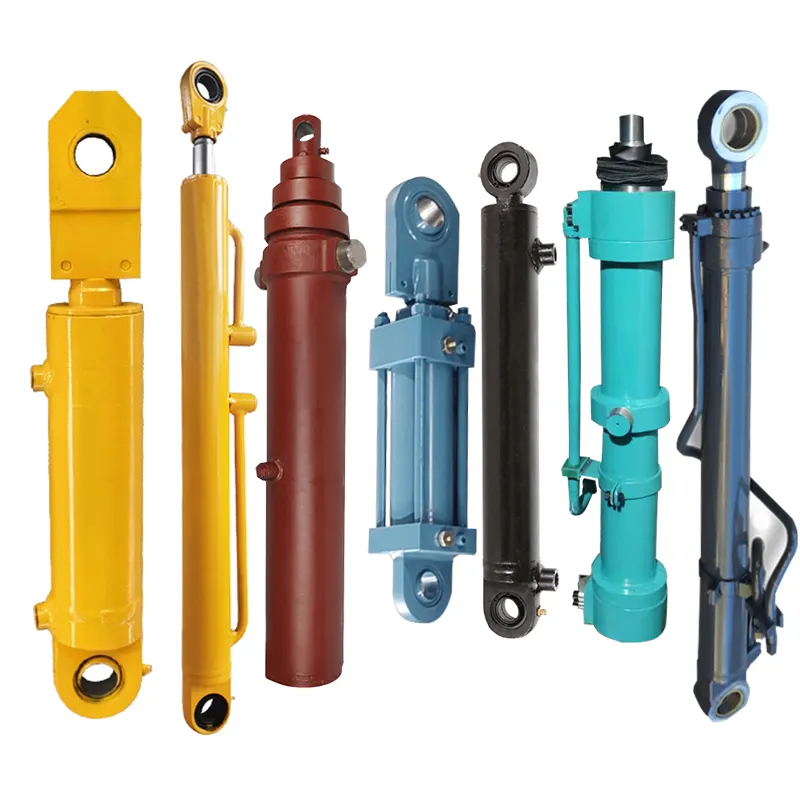
How does a lift cylinder handle variations in cylinder size and capacity?
A lift cylinder is designed to handle variations in cylinder size and capacity to accommodate different lifting requirements. Here’s an explanation of how lift cylinders handle these variations:
1. Size and Dimensions:
Lift cylinders come in various sizes and dimensions to suit different applications. The cylinder size refers to its overall dimensions, such as the diameter and length of the cylinder body. Lift cylinders can be manufactured in a range of sizes, allowing for flexibility in selecting the appropriate cylinder size based on the specific lifting needs. Larger cylinders are capable of generating greater lifting force, while smaller cylinders are more compact and suitable for applications with limited space.
2. Capacity and Load Rating:
The capacity of a lift cylinder refers to the maximum load it can lift safely. Lift cylinders are rated for specific load capacities, and it is important to select a cylinder with a suitable capacity for the intended lifting task. Lift cylinders with higher load ratings are designed to handle heavier loads, while cylinders with lower load ratings are suitable for lighter loads. The capacity of the lift cylinder is determined by factors such as its construction, materials, and structural integrity.
3. Hydraulic Pressure:
The hydraulic pressure applied to the lift cylinder affects its lifting capacity and force generation. By adjusting the hydraulic pressure within the system, operators can control the lifting capability of the cylinder. Higher hydraulic pressure results in increased lifting force, allowing the cylinder to handle larger loads. Conversely, lower hydraulic pressure reduces the lifting capacity of the cylinder, making it suitable for lighter loads. The hydraulic pressure can be regulated using control valves or pressure relief valves within the hydraulic system.
4. Application-specific Design:
Lift cylinders are designed to meet the requirements of specific applications. Manufacturers take into consideration factors such as load characteristics, operating conditions, and safety considerations when designing lift cylinders. This ensures that the cylinder size and capacity are matched to the demands of the application, allowing for efficient and safe lifting operations.
5. Customization Options:
In some cases, lift cylinders can be customized to fit specific size or capacity requirements. Manufacturers may offer customization options such as special sizes, load capacity modifications, or additional features to meet unique application needs. Customization allows for a tailored solution that optimizes the performance and efficiency of the lift cylinder in a particular setting.
In summary, lift cylinders handle variations in cylinder size and capacity by offering a range of sizes and load ratings. The hydraulic pressure can be adjusted to match the lifting requirements, and lift cylinders can be customized for specific applications. With their versatility and adaptability, lift cylinders provide efficient and reliable lifting capabilities across a wide range of industries and lifting tasks.
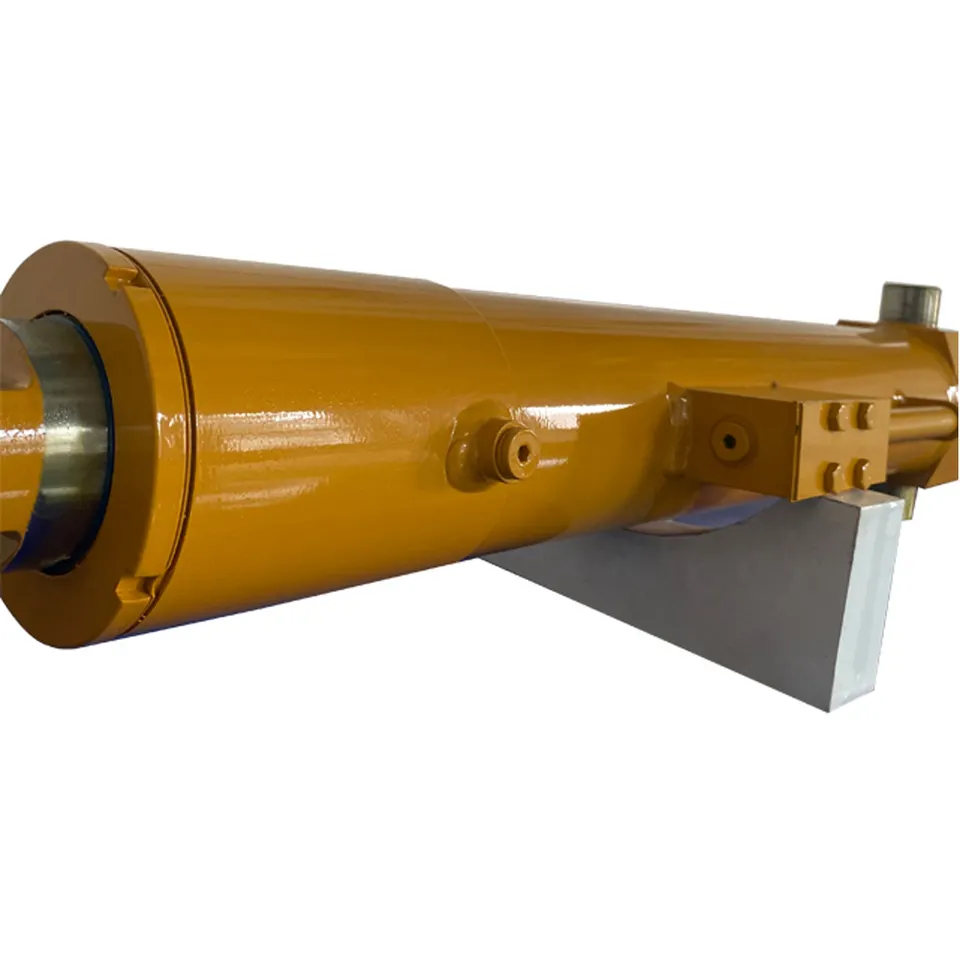
How does a lift cylinder handle variations in cylinder stroke length?
A lift cylinder is designed to handle variations in cylinder stroke length through its adjustable rod or piston. The stroke length refers to the distance the cylinder can extend or retract, and it can be adjusted to meet specific requirements in different applications.
In hydraulic lift cylinders, the stroke length can be modified by adjusting the position of the rod or piston within the cylinder. This adjustment is typically achieved by adding or removing spacers or by using adjustable stops. By changing the effective length of the cylinder, the stroke can be increased or decreased accordingly.
The adjustment of the stroke length allows the lift cylinder to accommodate different operational needs. For example, in material handling applications, where varying load sizes are encountered, the stroke length can be adjusted to ensure that the cylinder extends or retracts precisely to the required position. This flexibility enables the lift cylinder to handle a wide range of loads and adapt to different lifting or pushing scenarios.
In addition to adjusting the stroke length, lift cylinders often incorporate position feedback mechanisms. These mechanisms, such as linear transducers or position sensors, provide real-time feedback on the actual position of the cylinder. By monitoring the position, the control system can ensure accurate and precise control over the cylinder’s movement, regardless of the stroke length.
The ability to handle variations in cylinder stroke length is crucial in many industrial applications. It allows for adaptability, efficiency, and improved performance in tasks such as material handling, assembly, and automation. By adjusting the stroke length, lift cylinders can optimize their operation, ensuring that the required force and movement are achieved consistently.
In summary, lift cylinders handle variations in cylinder stroke length through adjustable rods or pistons. This adjustment capability, combined with position feedback mechanisms, enables precise control and adaptability in different applications. By accommodating different stroke lengths, lift cylinders can effectively meet the specific requirements of a wide range of industrial tasks.
What is a lift cylinder and how does it function in hydraulic systems?
A lift cylinder, also known as a hydraulic lift cylinder or hydraulic lifting cylinder, is a device used in hydraulic systems to generate linear motion and provide lifting force. It is a type of hydraulic actuator that converts hydraulic pressure into mechanical force to lift heavy loads. Here’s an explanation of what a lift cylinder is and how it functions in hydraulic systems:
A lift cylinder consists of a cylindrical barrel, a piston, and a rod. The barrel is a hollow tube that houses the piston and allows fluid to flow in and out. The piston is a cylindrical component that separates the barrel into two chambers. The rod, attached to the piston, extends from the cylinder to connect with the load or the mechanism being lifted.
The lift cylinder operates based on the principles of Pascal’s law, which states that pressure exerted on a fluid in a confined space is transmitted equally in all directions. Here’s how a lift cylinder functions:
1. Extension:
When pressurized hydraulic fluid enters one side of the cylinder (the chamber behind the piston), it applies force on the piston, causing it to move in the direction of the load. This movement extends the rod outward, lifting or pushing the load.
2. Retraction:
Conversely, when the hydraulic fluid is supplied to the other side of the cylinder (the chamber in front of the piston), the pressure differential causes the piston to move in the opposite direction. This retracts the rod, lowering or pulling the load.
3. Control Valve:
The flow of hydraulic fluid into and out of the lift cylinder is controlled by a directional control valve. The valve regulates the direction and amount of fluid entering the cylinder, determining whether the cylinder extends or retracts. This control allows for precise and controlled lifting and lowering of the load.
4. Force and Load Capacity:
The force generated by the lift cylinder is determined by the hydraulic pressure applied to the piston and the effective area of the piston. By increasing or decreasing the hydraulic pressure, the lifting force can be adjusted to meet the specific load requirements.
5. Application:
Lift cylinders are widely used in various hydraulic systems, including hydraulic lifts, cranes, forklifts, dump trucks, and construction equipment. They provide the necessary force to lift heavy objects, perform material handling tasks, and support heavy loads in a controlled and efficient manner.
In summary, a lift cylinder is a hydraulic actuator that converts hydraulic pressure into mechanical force for lifting heavy loads. It functions by utilizing hydraulic fluid pressure to move the piston and extend or retract the rod, enabling the lifting or lowering of the load. The control valve regulates the fluid flow, and the force generated by the lift cylinder is determined by the hydraulic pressure and piston area. Lift cylinders find extensive applications in hydraulic systems across various industries.


editor by CX 2024-04-11