
Product Description
Guaranteed Quality 100kg hydraulic cylinders Upper arm cylinder for Boom Aerial work vehicle
In a boom aerial work vehicle, the upper arm cylinder refers to a hydraulic cylinder that is part of the upper arm assembly of the boom. The upper arm cylinder plays a crucial role in controlling the movement and positioning of the upper arm of the crash.
| bore diameter (D) | rod diameter (d) | stroke (S) | Installation distance (L) | working pressure | Interface dimensions (M) | weight |
| Φ110 | Φ75 | 815 | 1433 | 23MPa | 2-Φ9 | 100kg |
Here are some important aspects and applications of the upper arm cylinder in a boom aerial work vehicle:
-
Boom Extension and Retraction: The upper arm cylinder is responsible for extending and retracting the boom of the aerial work vehicle. A double-acting hydraulic cylinder receives hydraulic pressure to extend or retract, allowing the boom to reach different heights and lengths as needed.
-
Vertical Articulation: The upper arm cylinder assists in the vertical articulation of the boom. By actuating the hydraulic cylinder, the upper arm of the crash can be raised or lowered, enabling the operator to position the aerial platform at various vertical angles to reach desired work areas.
-
Load Handling: The upper arm cylinder contributes to the load handling capabilities of the boom aerial work vehicle. It provides the necessary hydraulic force to lift and lower heavy loads or equipment attached to the boom, allowing for efficient material handling and equipment deployment at elevated heights.
-
Control and Safety: The upper arm cylinder coordinates with other hydraulic components and control systems of the aerial work vehicle. It ensures precise control and safe operation of the boom by allowing operators to adjust the angle, height, and reach of the boom with accuracy and stability.
-
Range of Applications: The upper arm cylinder finds applications in various industries that require working at heights. This includes construction, maintenance, telecommunications, utility services, tree care, window cleaning, event management, and more. The versatility of the upper arm cylinder enables workers to access and perform tasks at elevated locations safely and efficiently.
-
Stability and Balance: The upper arm cylinder contributes to the strength and balance of the aerial work vehicle. It helps maintain the structural integrity of the boom and ensures smooth and controlled movement, minimizing unwanted swaying or oscillations during operations.
Some information about the hydraulic system in a boom aerial work vehicle
-
Hydraulic Power Source: A hydraulic power unit (HPU) or hydraulic pump typically powers the hydraulic system. The HPU generates hydraulic pressure by converting mechanical energy from an internal combustion engine or an electric motor into hydraulic fluid flow. The hydraulic fluid is typically oil-based and provides the necessary power for operating the hydraulic components.
-
Hydraulic Fluid Reservoir: The hydraulic system includes a fluid reservoir that stores an adequate supply of hydraulic fluid. The pool ensures sufficient fluid is available for the operation of the hydraulic system and helps dissipate heat generated during system operation.
-
Hydraulic Hoses and Lines: Hydraulic hoses and lines connect the hydraulic components, such as cylinders, valves, and the hydraulic power unit. These hoses and lines transport the pressurized hydraulic fluid to the various parts of the system, allowing power and control signals to be transmitted.
-
Hydraulic Cylinders: The hydraulic system in a boom aerial work vehicle includes hydraulic cylinders, such as the upper arm cylinder and lower arm cylinder. These cylinders are responsible for extending, retracting, and controlling the movement of the boom, providing the necessary lifting and positioning capabilities.
-
Control Valves: Control valves are vital components in the hydraulic system. They regulate the flow and direction of hydraulic fluid, allowing operators to control the movement and speed of the boom, as well as other hydraulic functions. Control valves may be manually operated or controlled electronically, depending on the vehicle’s features.
-
Hydraulic Filtration and Cooling: The hydraulic system incorporates filtration elements to remove contaminants from the hydraulic fluid, ensuring optimal performance and longevity of the system components. Additionally, hydraulic systems may have cooling mechanisms, such as heat exchangers or fans, to dissipate excess heat generated during system operation and maintain the hydraulic fluid at suitable temperatures.
-
Safety Features: Boom aerial work vehicles often include safety features in the hydraulic system, such as pressure relief valves and load-holding valves. These safety mechanisms prevent overloading, excessive pressure, or uncontrolled movements, enhancing the equipment’s and its operators’ overall safety.
Our Company
We have a first-class independent R&D platform for assembly. The forklift cylinder production workshop has 4 semi-automatic lifting cylinder assembly lines and 1 fully automatic tilting cylinder assembly line, with a designed annual production capacity of 1 million pieces; the special cylinder workshop is equipped with semi-automatic cleaning and assembly systems of various specifications, with a designed annual production capacity of 200,000 essays. It has famous CNC machining equipment, machining centers, special equipment for high-precision cylinder processing, robot welding machines, automatic cleaning machines, automatic cylinder assembly machines, and automatic paint production lines. We have more than 300 sets of critical equipment running. The optimized allocation and efficient utilization of equipment resources ensure the precision requirements of the products and meet the high standard quality requirements of the products.
|
Forklift cylinder assembly shop |
Other types of cylinder assembly shop |
Welding
Painting & coating
|
Painting & coating line |
Fully automatic water-based |
Testing
To further improve product performance, and establish the leadership position of our hydraulic cylinder in the industry, our company and zjimee jointly established a Comprehensive performance laboratory of hydraulic cylinders, hydraulic valves, and hydraulic pumps; the lab is computer-assisted testing, using electro-hydraulic control technology, the test conditions preset by computer, which improves the test accuracy and system versatility, and the experimental data.
The automatic collection is realized through the application of sensors, and the output data, such as the internal leakage and load efficiency of the cylinder or the valve, are directly processed by the computer and converted to standard units (ml/min; %). At the same time, to ensure the working safety of the hydraulic system, the state monitoring function is carried out for key performance parameters, such as “oil temperature monitoring, liquid level monitoring, filter device monitoring,” etc. Among them, the hydraulic cylinder test stand can test the performance of “load efficiency” and “internal leakage” by readings. At the same time, it is equipped with a grating ruler measuring instrument, which meets the requirements of all test items of hydraulic cylinder products in the national standard.
Our Factory
Packaging & Shipping
A short lifting cylinder for a forklift is a specific type of hydraulic cylinder designed for vertical lifting applications in forklifts. It is typically used to raise and lower the mast assembly and forks of the forklift, allowing for the lifting and positioning of loads.
| Certification: | GS, RoHS, CE, ISO9001 |
|---|---|
| Pressure: | High Pressure |
| Work Temperature: | Normal Temperature |
| Acting Way: | Double Acting |
| Working Method: | Rotary |
| Adjusted Form: | Regulated Type |
How does a forklift hydraulic cylinder handle variations in fluid pressure?
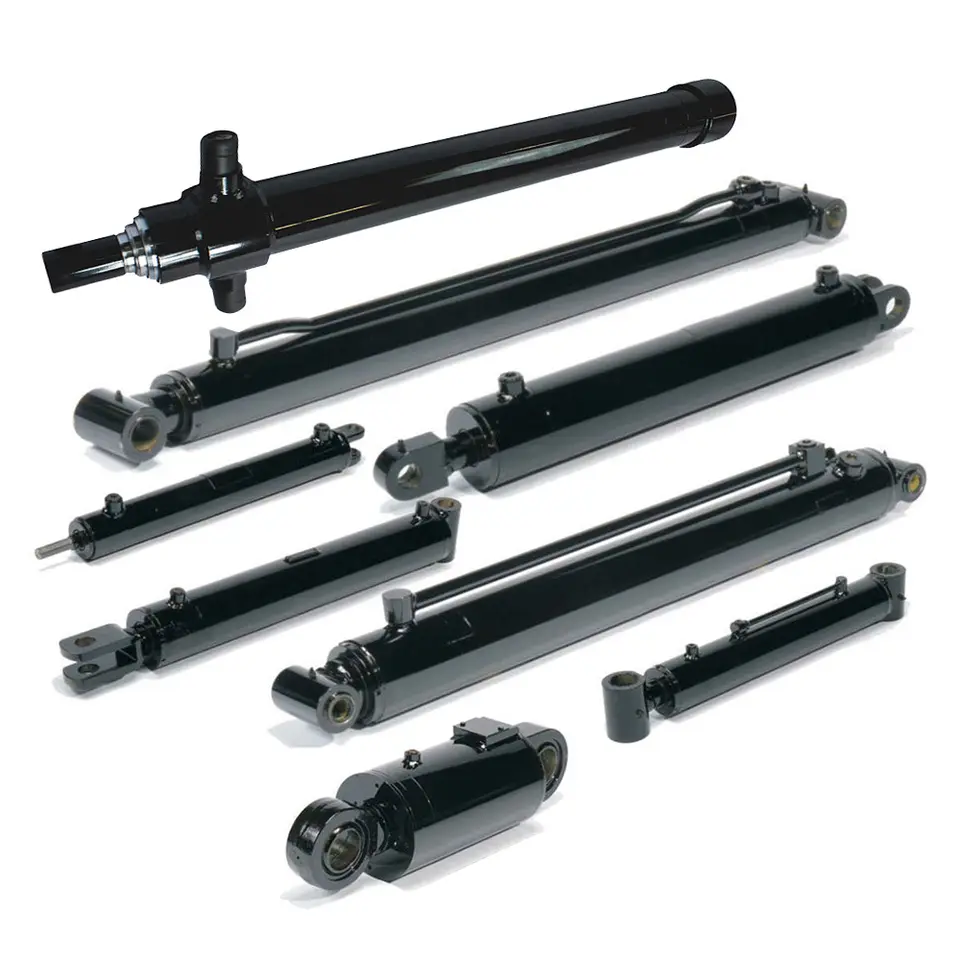
A forklift hydraulic cylinder is designed to handle variations in fluid pressure and maintain consistent performance. Here’s an explanation of how it accomplishes this:
The hydraulic cylinder’s ability to handle variations in fluid pressure is primarily attributed to its internal design and the use of various components:
1. Cylinder Construction:
The cylinder barrel, which houses the piston and seals, is designed to withstand high-pressure conditions. It is typically made of durable materials such as high-strength steel to ensure structural integrity and prevent leakage or deformation.
2. Sealing Mechanisms:
The hydraulic cylinder incorporates seals at key points to prevent fluid leakage and maintain pressure. These seals, typically made of rubber or other elastomeric materials, create a tight barrier between the piston and cylinder barrel. They are designed to withstand variations in pressure and provide reliable sealing performance.
3. Pressure Relief Mechanisms:
In situations where there are sudden increases in fluid pressure, hydraulic cylinders may be equipped with pressure relief mechanisms. These mechanisms allow excess pressure to be released, preventing damage to the cylinder or other hydraulic system components. Pressure relief valves or similar devices are commonly used for this purpose.
4. Hydraulic Fluid Properties:
The hydraulic fluid itself plays a role in handling pressure variations. The fluid is carefully selected based on its viscosity, stability, and ability to withstand pressure changes. It is essential to use hydraulic fluids that are specifically formulated for the operating conditions and pressure requirements of the forklift hydraulic system.
5. Control Valves:
The forklift’s hydraulic system includes control valves that regulate the flow and direction of hydraulic fluid. These valves allow the operator to control the pressure and flow rate within the hydraulic cylinder, ensuring safe and efficient operation even during pressure variations.
By incorporating these design elements and components, a forklift hydraulic cylinder can effectively handle variations in fluid pressure. The robust cylinder construction, sealing mechanisms, pressure relief mechanisms, appropriate hydraulic fluid selection, and control valves work together to maintain consistent performance and prevent any adverse effects caused by pressure fluctuations.
In summary, a forklift hydraulic cylinder is specifically designed to handle variations in fluid pressure. Through its construction, sealing mechanisms, pressure relief mechanisms, hydraulic fluid properties, and control valves, the cylinder ensures reliable and consistent performance even under changing pressure conditions.
How does a forklift hydraulic cylinder contribute to smooth lifting and lowering?
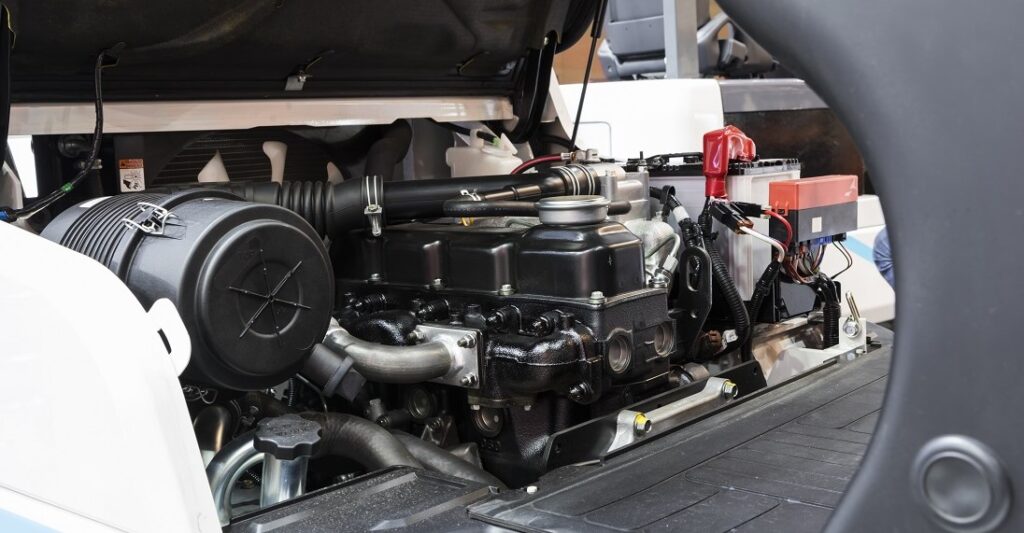
A forklift hydraulic cylinder plays a crucial role in achieving smooth lifting and lowering operations. Here’s an explanation of how it contributes to this process:
The smooth lifting and lowering of a forklift’s load is made possible by the hydraulic cylinder working in tandem with the hydraulic system. The hydraulic cylinder contributes in the following ways:
1. Controlled Fluid Power:
The hydraulic cylinder utilizes controlled fluid power to lift and lower the load. When the operator activates the hydraulic system, hydraulic fluid is pumped into the cylinder, exerting pressure on the piston inside. This pressure creates a force that raises or lowers the load smoothly and evenly.
2. Piston and Cylinder Design:
The design of the hydraulic cylinder’s piston and cylinder bore contributes to smooth lifting and lowering. The piston is precisely machined to fit within the cylinder bore with minimal clearance. This tight fit, along with the use of seals and hydraulic fluid, helps minimize friction and ensure smooth movement of the piston within the cylinder.
3. Valve Control:
The hydraulic cylinder’s movement is controlled by valves in the hydraulic system. These valves regulate the flow of hydraulic fluid into and out of the cylinder. By adjusting the valve settings, the operator can control the speed and rate of lifting and lowering. The valves allow for precise control, enabling smooth and gradual movements of the load.
4. Load Balancing:
The hydraulic cylinder contributes to load balancing during lifting and lowering operations. By adjusting the extension or retraction of the cylinder, the operator can maintain a proper balance between the load and the forklift. This balance helps prevent sudden shifts or jerky movements, resulting in smoother and more stable lifting and lowering.
5. Damper Mechanisms:
In some forklift hydraulic systems, dampers or shock absorbers are incorporated to further enhance smooth lifting and lowering. These mechanisms help cushion the movements of the hydraulic cylinder, reducing any sudden jolts or vibrations. The dampers absorb and dissipate energy, resulting in smoother and more controlled load handling.
In summary, a forklift hydraulic cylinder contributes to smooth lifting and lowering operations through controlled fluid power, precise piston and cylinder design, valve control, load balancing, and the potential inclusion of dampers. These factors work together to provide operators with the ability to lift and lower loads smoothly, efficiently, and with enhanced control.
How Does a Forklift Hydraulic Cylinder Handle Variations in Lift Height?
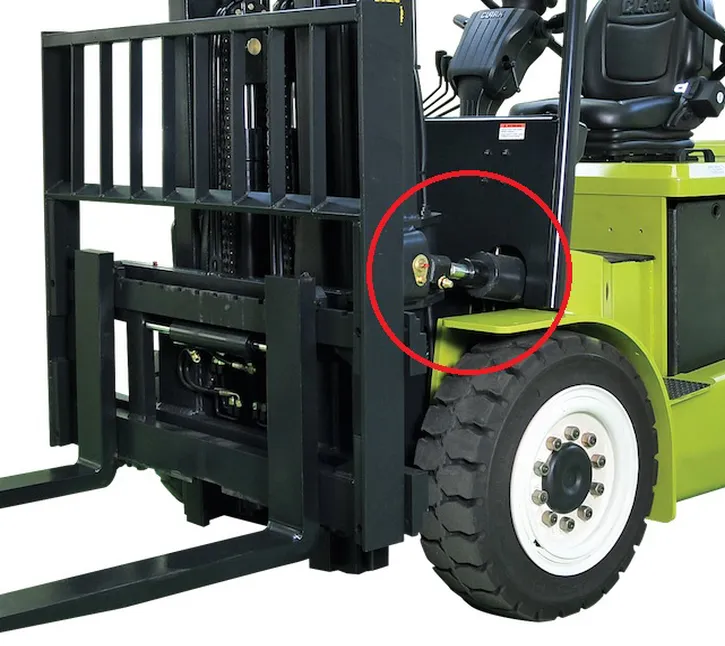
A forklift hydraulic cylinder is responsible for raising and lowering the forks or lifting platform, allowing the forklift to handle loads at different heights. It handles variations in lift height through a combination of design features and hydraulic principles. Here’s a detailed explanation of how a forklift hydraulic cylinder handles variations in lift height:
1. Piston and Cylinder Design:
The hydraulic cylinder consists of a piston and a cylinder, which are sealed together to form a closed hydraulic system. The piston is connected to the forks or lifting platform, while the cylinder is fixed to the forklift frame. The design of the piston and cylinder allows for smooth movement and effective transfer of hydraulic pressure to generate lifting force.
2. Hydraulic Fluid and Pressure:
The hydraulic cylinder operates on the principle of Pascal’s Law, which states that when pressure is applied to a fluid in a closed system, it is transmitted equally in all directions. In the case of a forklift hydraulic cylinder, hydraulic fluid is used as the medium to transmit pressure. When hydraulic fluid is pumped into the cylinder, it creates pressure on the piston, causing it to move upward and lift the forks or lifting platform.
3. Cross-Sectional Area and Force:
The cross-sectional area of the piston within the hydraulic cylinder determines the force that can be exerted. A larger piston area can generate a greater lifting force. By varying the diameter of the piston, forklift manufacturers can adjust the lifting capacity and handle variations in lift height. Forklifts designed for heavier loads typically have larger piston areas to generate the necessary lifting force.
4. Valves and Controls:
The hydraulic system of a forklift includes valves and controls that regulate the flow of hydraulic fluid to the cylinder. These valves, such as control valves and relief valves, allow for precise control of the lifting operation. By adjusting the valves, operators can control the speed of ascent and descent, enabling smooth and controlled variations in lift height.
5. Telescopic Cylinders:
In some forklift designs, especially those used for high-reach applications, telescopic cylinders are employed. Telescopic cylinders consist of several nested stages that extend and retract, providing increased lift height. These cylinders allow for a compact design when retracted while offering extended reach when fully extended. Telescopic cylinders enable forklifts to handle variations in lift height without compromising stability or requiring excessively long cylinder strokes.
6. Stability and Counterbalancing:
Handling variations in lift height requires maintaining forklift stability. Forklifts are designed with counterweight systems to balance the load and prevent tipping. The hydraulic cylinder’s operation is coordinated with the counterweight system, ensuring that the center of gravity remains within safe limits during lifting and lowering operations. This counterbalancing helps maintain stability even when handling loads at different heights.
Through careful design, hydraulic principles, and the integration of valves and controls, a forklift hydraulic cylinder effectively handles variations in lift height. The combination of hydraulic pressure, piston and cylinder design, control mechanisms, and counterbalancing ensures precise and controlled lifting operations, allowing forklifts to safely handle loads at different heights as required in various material handling applications.


editor by CX 2023-12-12