
Product Description
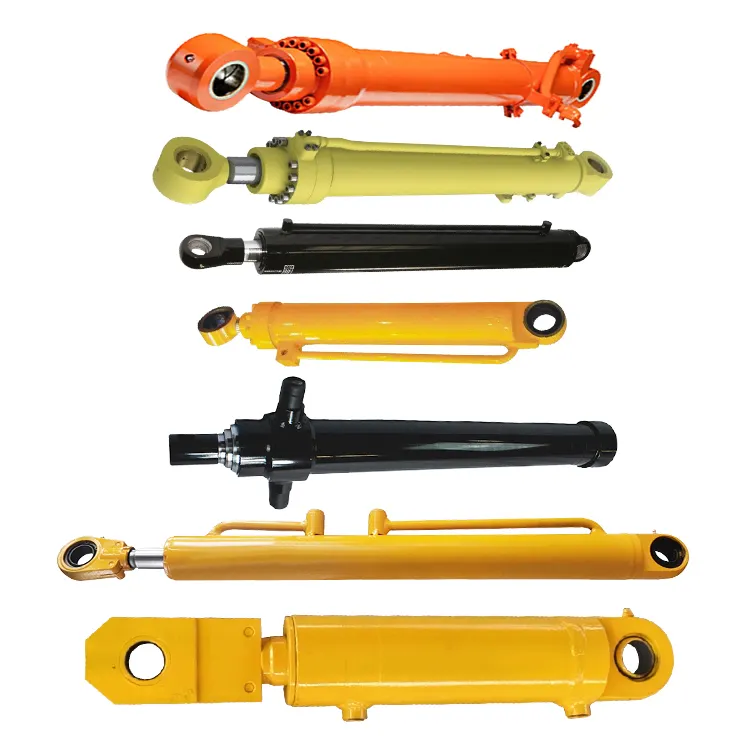
Parker Telescopic Hydraulic Dump Truck/Trailer Cylinder/Roll-Off hoist
Features
·Parker Seal Division-“Zero-leak”Sealing Package
·100,000 Yield Induction Hardened Chrome Plated Rod as Standard
·Skived and Burnished Tubing
·Hardened Pin-eye Bushings
·Parker”Zero-leak” Internal Bypass Piston Design
·Greater Rod Support
Benefits
·Leak Free Extended Life
·More Resilient to External Damage
·Consistant Quality
·Extends Cylinder Life as Cylinder Wears
·More Efficient/Less Heat
·Resiste rod Deflection and Side Loading
| Part Description | |
| Application | Dump truck,Tipping,Trailer,Underbody,Roll-off Hoist |
| Material of cylinder tube | 45 steel,27SiMn,Carbon steel,Alloy steel and general seamless steel |
| Seal | Hallite,SKF,NOK,Guarnitec,Parker,and other equivalent brands |
| Coating | Hard Chrome 0.03-0.05mm |
| Temperature | _30°C to |
Why choose us?
Roca team takes all your concerns into consideration to suit your hydraulic cylinder requirements. We work out the best design solution for your application.
Hydraulic cylinders are the most effective and efficient method of pushing, pulling, lifting, and lowering.
Nowadays hydraulic cylinders play an essential role in daily application and industry:
√ Mining
√ Earthmoving & Construction
√ Agriculture &Forestry
√Waste Management & Material Handing
√Ship crane & offshore
Selecting the right cylinders for an application is critical in obtaining maximum performance and reliability.
ROCA team considers all your concerns to suit your hydraulic cylinder requirements.
Together, we work out the best design solution for your application.
FAQ
Q1.Do you have MOQ?
Depending on different ideas, Can be negotiated. The larger the quantity is, the competitive the unit price will be.
Q2.Should the customer pay the delivery fee, How much is it?
For the delivery fee, many samples are being requested to be sent, so we must get the delivery fee.
If you tell me to use the appointed Express, you will give me your express account or you will pay according to the Express.
If you do not request, I will choose a cheap one in China.
Q3.How about the after sale service?
1) We will always keep the quality the same as the buyer’s samples and if there is something with the quality, we will make compensation for our customers.
2) We will suggest our packing and take charge in our packing, we will keep the goods safe in the delivery.
3) We will trace the goods from the production to selling, we will solve the problems in the selling for our customers.
Q4.When can I get a price?
We usually quote within 24 hours after we get your inquiry.
Q5: Are you a trade company or manufacturer?
We are a professional manufacturer with our own factory.
| Certification: | RoHS, CE, ISO9001 |
|---|---|
| Pressure: | High Pressure |
| Work Temperature: | High Temperature |
| Acting Way: | Single Acting |
| Working Method: | Rotary |
| Adjusted Form: | Regulated Type |
| Customization: |
Available
|
|
|---|
Can hydraulic cylinders be used in narrow-aisle forklifts?
Yes, hydraulic cylinders can be used in narrow-aisle forklifts. In fact, hydraulic cylinders play a crucial role in the lifting and operational capabilities of these specialized forklifts designed for maneuvering in narrow spaces. Here’s an explanation of their use:
Narrow-aisle forklifts, also known as narrow-aisle reach trucks or very narrow aisle (VNA) forklifts, are designed to operate in tight spaces with narrow aisles and high racking systems. These forklifts rely on hydraulic systems, including hydraulic cylinders, to perform their lifting and positioning functions.
The hydraulic cylinder in a narrow-aisle forklift is responsible for vertically extending and retracting the mast assembly, which carries the load-carrying forks. The mast assembly typically consists of multiple stages that can reach significant heights to access the high racking systems.
When the operator activates the lifting control, hydraulic fluid is pressurized and directed to the hydraulic cylinder. The cylinder extends vertically, raising the mast and forks to the desired height. The hydraulic system provides precise control over the lifting speed and positioning, allowing for efficient and accurate load handling in narrow spaces.
In addition to the lifting function, hydraulic cylinders can also contribute to the tilting and side-shifting capabilities of narrow-aisle forklifts. Some models are equipped with hydraulic cylinders that enable the tilting of the mast or the forks, allowing for better load positioning and stability. Hydraulic cylinders can also be employed to provide side-shifting functionality, enabling the lateral movement of the forks for improved load placement.
The use of hydraulic cylinders in narrow-aisle forklifts ensures that these specialized machines have the necessary power and control to operate in tight spaces. The hydraulic system provides the force required for lifting and positioning loads, while also offering the flexibility to tilt or shift the forks as needed.
In summary, hydraulic cylinders are an integral part of narrow-aisle forklifts. They enable the vertical lifting of the mast assembly and contribute to tilting and side-shifting functionalities. By utilizing hydraulic power, these forklifts can efficiently navigate narrow aisles and handle loads in high racking systems with precision and control.
 \
\
Can hydraulic cylinders be used in order fulfillment centers?
Yes, hydraulic cylinders can be used in order fulfillment centers. Order fulfillment centers require efficient and precise material handling equipment to handle the storage and movement of goods. Hydraulic cylinders are commonly used in various applications within these centers. Here’s an explanation of how they can be utilized:
Hydraulic cylinders find applications in order fulfillment centers in the following ways:
1. Conveyor Systems:
Conveyor systems are extensively used in order fulfillment centers for the transportation of goods. Hydraulic cylinders are employed to control the movement and positioning of conveyor belts. These cylinders enable smooth and precise adjustments of the conveyor height, ensuring efficient transfer of items between different processing areas.
2. Lift Tables and Platforms:
Hydraulic cylinders are utilized in lift tables and platforms used for order picking and loading/unloading operations. These cylinders provide controlled lifting and lowering of the tables or platforms, allowing operators to adjust the working height as needed. This enables ergonomic working conditions and precise alignment with shelving or loading docks.
3. Scissor Lifts:
Scissor lifts are commonly used in order fulfillment centers to reach elevated areas for order picking or stock replenishment. Hydraulic cylinders power the vertical movement of scissor lifts, providing stability and controlled elevation. The cylinders allow for precise positioning at different heights, enhancing efficiency and safety during the order fulfillment process.
4. Pallet Handling Equipment:
Order fulfillment centers often utilize pallet handling equipment, such as pallet jacks and pallet positioners, to move and stack palletized goods. Hydraulic cylinders are integral components of these machines, enabling the lifting and lowering of pallets. The cylinders provide the necessary force and control to handle heavy loads and ensure accurate placement of pallets.
5. Automated Guided Vehicles (AGVs):
AGVs are autonomous vehicles utilized in order fulfillment centers to transport goods within the facility. Hydraulic cylinders are employed in the lifting mechanisms of AGVs, allowing them to pick up and drop off loads at designated locations. The cylinders enable precise vertical movement and positioning of the load, ensuring accurate and efficient material handling.
In summary, hydraulic cylinders have various applications in order fulfillment centers, including conveyor systems, lift tables and platforms, scissor lifts, pallet handling equipment, and AGVs. These cylinders contribute to efficient and precise material handling, enhancing productivity and streamlining the order fulfillment process.
What is the Importance of Regular Maintenance for Hydraulic Cylinders?
Regular maintenance for hydraulic cylinders is of utmost importance to ensure their optimal performance, longevity, and safe operation. Hydraulic cylinders are critical components in various industrial applications, and neglecting their maintenance can lead to decreased efficiency, increased downtime, and potential safety hazards. Here are some key reasons highlighting the importance of regular maintenance for hydraulic cylinders:
- Preventive Maintenance:
- Optimal Performance:
- Extended Lifespan:
- Safety:
- Compliance with Manufacturer Recommendations:
Regular maintenance allows for preventive measures to be taken to identify and address potential issues before they escalate. By following a scheduled maintenance plan, hydraulic cylinders can be inspected for signs of wear, leaks, or damage. Regular servicing, such as lubrication, seal replacements, and cleaning, helps to keep the cylinders in optimal condition, minimizing the risk of unexpected failures and costly repairs.
Proper maintenance ensures that hydraulic cylinders operate at their peak performance. Over time, contaminants, such as dirt, debris, and moisture, can accumulate within the hydraulic system, affecting the cylinder’s performance. Regular maintenance includes the cleaning and flushing of the hydraulic system, which helps to remove contaminants and maintain the proper functioning of the cylinder. This, in turn, ensures efficient and reliable operation, maximizing productivity and minimizing downtime.
Regular maintenance significantly contributes to the longevity of hydraulic cylinders. By addressing wear and tear, replacing worn-out components, and maintaining proper fluid levels and cleanliness, the overall lifespan of the cylinders can be extended. Well-maintained cylinders are less prone to premature failures and breakdowns, reducing the need for frequent replacements and saving on replacement costs in the long run.
Maintaining hydraulic cylinders in good working condition is crucial for ensuring the safety of personnel and equipment. Hydraulic failures, such as leaks, seal failures, or component malfunctions, can lead to hazardous situations, including uncontrolled movements, equipment damage, or injury to operators or nearby personnel. Regular maintenance helps to identify and rectify potential safety risks, ensuring that the hydraulic cylinders operate safely and reliably.
Regular maintenance ensures compliance with the manufacturer’s recommendations and guidelines for hydraulic cylinders. Manufacturers often provide specific maintenance intervals and procedures to keep the cylinders in optimal condition. Following these recommendations helps to uphold warranty requirements, maintain equipment reliability, and ensure that the cylinders perform as intended.
In summary, regular maintenance for hydraulic cylinders is essential for preventive measures, optimal performance, extended lifespan, safety, and compliance. By implementing a proactive maintenance program, including inspections, cleaning, lubrication, and component replacements, the overall reliability and efficiency of hydraulic cylinders can be maximized, reducing the risk of failures, improving productivity, and enhancing workplace safety.


editor by CX 2023-12-14