
Product Description
Company introduction
HangZhou CHINAMFG is a comprehensive manufacturing enterprise engaged in hydraulic cylinders, excavator attachment, metal casting, hydraulic components with certification approval to meet custom or OEM requirements.
ROCA owned factory offers customers effective-cost products with quality assurance. With its professional and experienced R&D team, CHINAMFG Hydraulic devotes itself to research and development to optimize products applied in construction, mining, waste management, forestry, agriculture, etc.
Model
CAT Series -322B-BL
Stick Number : 1772443
Boom Number :1184166
Bucket Number : 1232044
Product introduce
CAT excavator 320L boom cylinder ,arm cylinder,bucket cylinder
Our excavator hydraulic cylinder has 3 types,boom cylinder,arm cylinder,also named stick cylinder,bucket cylinder, we also can make bulldozer hydraulic lift cylinder.
They are made from good material that are heat-treated and hardened to improve the lifespan while meeting the demanding requirements of earthmoving and mining applications.
Цилиндр стрелы экскаватора CAT 322B-BL, цилиндр рукояти, цилиндр ковша
| Working temperature | -40°C ~ 80°C |
| Max. duration of extension | 0.5 hour |
| Color | RAL9005,Customize |
| Material | CK45,ST52,ST52-3,27SiMn,Customize |
| Seal kit | SKF, Trelleborg, Halite, Chesterton, NOK, Kayaba |
| Piston rod | Hard chromed |
| Packaging | Plywood case |
| Warranty | 12 months |
| Payment | T/T |
Specification
| Max. Working pressure | 250bar |
| Weight | 143kg |
| Working volume | 43L |
| Total volume | 47L |
| Max. Cyl. Load (start tipping) | 345kN |
| Extension | 1 | 2 | 3 |
| Diameter | 149mm | 129mm | 110mm |
| stroke | 1060mm | 1085mm | 1085mm |
Pictures
Excavator is the most widely used construction machinery.
The shock load, harsh working environment, precision movement control require high standards on excavator cylinders.
ROCA guarantees excavator cylinder high performance of abrasion resistance and operation stability in any harsh condition has and gains recognition from every CHINAMFG customer with good quality at a lower cost.
Roca manufactures full-size excavator cylinders for mini excavators to largeexcavators.
Xihu (West Lake) Dis. Mining Group Co., Ltd. is a sizable multinational mining group performing most competitively in Chinese mining industry. CHINAMFG locate in the same CHINAMFG Mining output area, as the mining cylinder plant that grew up in the mining industry, we repair and reman a lot of mining haul truck cylinder. For a decade CHINAMFG has been focused on the production of various types of imported mine-used off-highway trucks & mining trucks.Our cylinders are mainly applied to world-famous brands such as Cat, Komatsu, Hitachi, Liebherr, BELAZ, and other famous international brands.
Single-Acting Telescopic Cylinders
This type of cylinder applies hydraulic pressure in 1 direction only and the return of the telescopic stages is by load such as a truck-trailer.
ROCA single-acting multistage hoists are used widely throughout the transport sector, where they are used in tip trucks servicing agriculture, earthmoving, construction, food processing applications.
Double-Acting Telescopic Cylinder
This type of cylinder is constructed with porting to both the annular and full bore area so hydraulic pressure can be applied to both surfaces and the cylinder stages can move in multiple directions without the need of an outside force, such as gravity.ROCA double-acting multi-stage cylinders are used in a wide variety of applications across many industries where space restrictions prohibit the use of a rod cylinder and require a compact telescopic cylinder design.
There are a wide range of products in the cylinder industry and having a specialist working on behalf of the customer is very important. With our years of experience, our business is positioned to provide prompt service, value and long lasting customer relationships.We work toward getting you better products and better service with competitive price.
FAQ
Q1.Do you have MOQ?
Depending on different ideas, Can be negotiated. The larger the quantity is, the competitive the unit price will be.
Q2.Should the customer pay the delivery fee, How much is it?
For the delivery fee, many samples are being requested to be sent, so we must get the delivery fee.
If you tell me to use the appointed Express, you will give me your express account or you will pay according to the Express.
If you do not request, I will choose a cheap one in China.
Q3.How about the after sale service?
1) We will always keep the quality the same as the buyer’s samples and if there is something with the quality, we will make compensation for our customers.
2) We will suggest our packing and take charge in our packing, we will keep the goods safe in the delivery.
3) We will trace the goods from the production to selling, we will solve the problems in the selling for our customers.
Q4.When can I get a price?
We usually quote within 24 hours after we get your inquiry.
Q5: Are you a trade company or manufacturer?
We are a professional manufacturer with our factory.
/* March 10, 2571 17:59:20 */!function(){function s(e,r){var a,o={};try{e&&e.split(“,”).forEach(function(e,t){e&&(a=e.match(/(.*?):(.*)$/))&&1
| Certification: | GS, RoHS, CE, ISO9001 |
|---|---|
| Pressure: | Medium Pressure |
| Work Temperature: | Low Temperature |
| Acting Way: | Double Acting |
| Working Method: | Straight Trip |
| Adjusted Form: | Regulated Type |
| Customization: |
Available
|
|
|---|
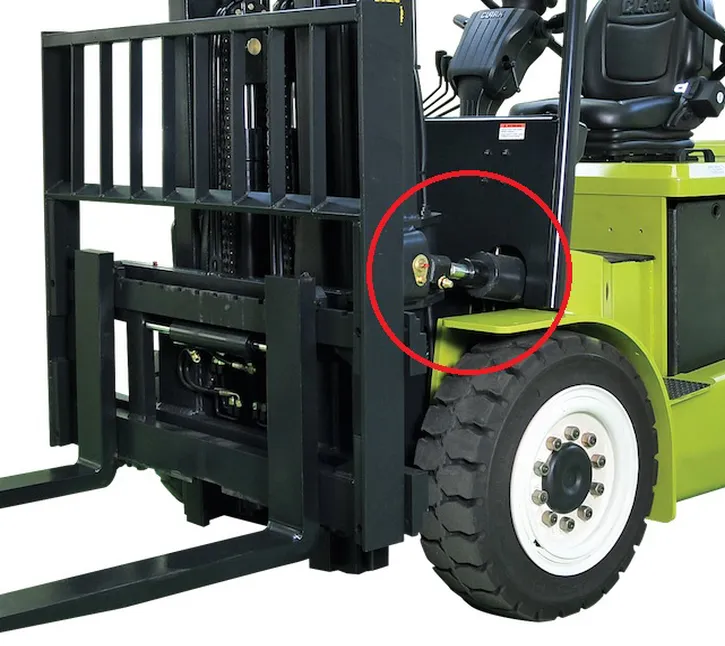
How does a forklift hydraulic cylinder contribute to quick load release?
A forklift hydraulic cylinder plays a crucial role in facilitating quick load release during material handling operations. Here’s an explanation of how it achieves this:
The hydraulic cylinder’s contribution to quick load release is primarily attributed to its design and the following factors:
1. Cylinder Actuation:
The hydraulic cylinder is actuated by the controlled release of hydraulic fluid. When the operator activates the appropriate controls, the hydraulic system allows the fluid to flow back into the reservoir, causing the cylinder to retract rapidly. This rapid retraction enables quick release of the load, expediting the unloading process.
2. Flow Control Valves:
The forklift’s hydraulic system incorporates flow control valves that regulate the rate of fluid flow to and from the hydraulic cylinder. During load release, these valves can be adjusted to increase the flow rate, allowing the hydraulic fluid to return to the reservoir more quickly. By controlling the flow, the cylinder can retract rapidly, facilitating quick load release.
3. Load Lowering Speed:
Hydraulic cylinders also contribute to quick load release through their load lowering functionality. When the operator desires to lower the load rapidly, the hydraulic system can be adjusted to increase the flow rate of the hydraulic fluid, which allows for faster descent of the load. This controlled acceleration of load lowering speed helps expedite the unloading process.
4. Responsive Control System:
The forklift’s hydraulic control system, including the controls for the hydraulic cylinder, is designed to be responsive and easy to operate. The operator can quickly activate the load release functions, initiating the rapid retraction of the cylinder and the subsequent quick release of the load. The intuitive control system ensures efficient and timely load release.
5. Safety Measures:
While facilitating quick load release, forklift hydraulic cylinders also incorporate safety measures to prevent uncontrolled or accidental release of the load. These safety features, such as pressure relief valves and load holding valves, ensure that the load release process remains safe and controlled, minimizing the risk of accidents or damage.
In summary, a forklift hydraulic cylinder contributes to quick load release through its actuation mechanism, flow control valves, load lowering functionality, responsive control system, and integrated safety measures. By utilizing these features, the cylinder enables rapid retraction and controlled release of the load, enhancing the efficiency of material handling operations.
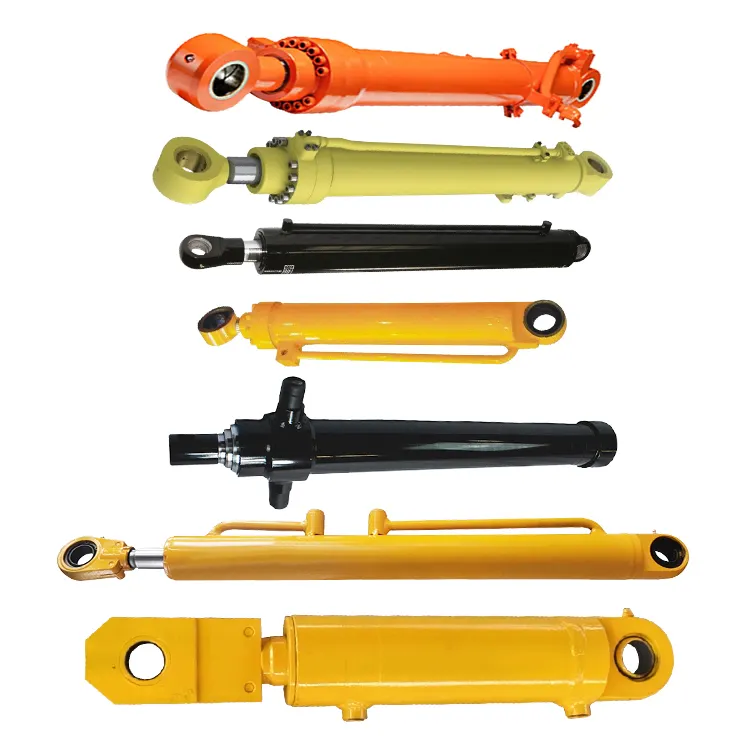
How does a forklift hydraulic cylinder contribute to load handling precision?
A forklift hydraulic cylinder plays a significant role in achieving precise load handling. Here’s an explanation of how it contributes to load handling precision:
The hydraulic cylinder contributes to load handling precision in the following ways:
1. Controlled Lifting and Lowering:
The hydraulic cylinder enables controlled lifting and lowering of the forks or attachment. By adjusting the hydraulic pressure and flow, the operator can smoothly and precisely raise or lower the load. This control allows for accurate positioning of the forks and precise handling of the load, minimizing the risk of damage or accidents.
2. Variable Speed Control:
Forklift hydraulic cylinders offer variable speed control during lift and tilt operations. The operator can adjust the hydraulic flow rate to control the speed at which the forks or attachment move. This variable speed control allows for fine adjustments and precise positioning of the load, even in delicate or sensitive handling situations.
3. Load Balancing:
The hydraulic cylinder contributes to load balancing, which is crucial for precise load handling. By adjusting the extension or retraction of the cylinder, the operator can maintain a proper balance between the load and the forklift. This balance ensures stability and control during lifting, lowering, and transport, enhancing load handling precision.
4. Fork Positioning:
Hydraulic cylinders are responsible for controlling the positioning of the forks or attachment. By extending or retracting the cylinders, the operator can adjust the horizontal position of the forks, aligning them with the load or pallet. This precise fork positioning allows for accurate entry into pallets or containers, ensuring efficient load handling.
5. Attachment Control:
In forklifts with specialized attachments, hydraulic cylinders contribute to precise control of the attachment’s movements. Whether it’s a side shift, fork positioner, or rotating attachment, the hydraulic cylinder enables accurate adjustments and alignment of the attachment to the load. This precise attachment control enhances load handling precision, especially when dealing with unique or challenging load configurations.
In summary, a forklift hydraulic cylinder contributes to load handling precision through controlled lifting and lowering, variable speed control, load balancing, fork positioning, and attachment control. These factors work together to provide operators with the ability to handle loads with accuracy, control, and efficiency.
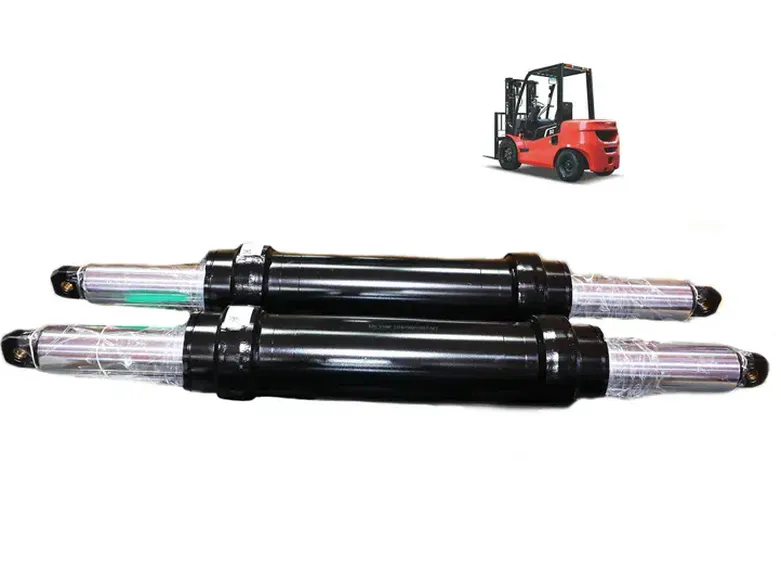
How Does a Forklift Hydraulic Cylinder Handle Variations in Load Weight?
A forklift hydraulic cylinder is designed to handle variations in load weight by utilizing the principles of hydraulic pressure and force. The hydraulic system of a forklift, including the hydraulic cylinder, employs a closed-loop system that allows for efficient and precise handling of different load weights. Here’s how a forklift hydraulic cylinder handles variations in load weight:
- Hydraulic Pressure:
- Force Balance:
- Load Sensing Valves:
- Controlled Lowering:
- Stability and Balance:
The hydraulic cylinder in a forklift operates based on the principle of hydraulic pressure. The forklift’s hydraulic system includes a hydraulic pump that pressurizes the hydraulic fluid, typically hydraulic oil. When the forklift operator activates the controls to lift a load, the pressurized hydraulic fluid is directed to the hydraulic cylinder. The high-pressure fluid exerts force on the piston inside the cylinder, creating an upward force that lifts the load.
The hydraulic cylinder is designed to maintain a force balance between the load weight and the hydraulic pressure. As the load weight increases, the hydraulic system compensates by adjusting the hydraulic pressure accordingly. The hydraulic pump supplies more pressurized fluid to the cylinder, allowing the cylinder to generate the required force to lift the heavier load. This force balance ensures that the forklift can handle variations in load weight effectively.
Modern forklifts often incorporate load sensing valves in their hydraulic systems to further optimize load handling. Load sensing valves continuously monitor the load weight and adjust the hydraulic pressure accordingly. These valves sense the force exerted on the hydraulic cylinder and regulate the pressure to match the load weight. When a heavier load is detected, the load sensing valve signals the hydraulic pump to increase the pressure, ensuring the necessary force is applied to lift the load safely and efficiently.
In addition to handling variations in load weight when lifting, forklift hydraulic cylinders also ensure controlled and safe lowering of the load. The hydraulic system uses various control valves and mechanisms to regulate the flow of hydraulic fluid during lowering. This allows for precise and gradual lowering of the load, regardless of its weight. The operator can control the descent speed using the forklift’s controls, ensuring smooth and safe handling of the load during the lowering process.
While the hydraulic cylinder plays a crucial role in handling variations in load weight, maintaining stability and balance is equally important. Forklifts are designed with a stable base and a counterweight at the rear to provide balance and prevent tipping. The hydraulic system, including the cylinder, works in conjunction with the forklift’s overall design to maintain stability and ensure safe operation, especially when dealing with uneven or shifting loads.
In summary, a forklift hydraulic cylinder handles variations in load weight by utilizing hydraulic pressure, force balance, load sensing valves, and controlled lowering mechanisms. These components and systems work together to ensure that the hydraulic cylinder can lift and lower loads of different weights safely and efficiently. The ability to adapt to varying load weights is essential for the versatility and effectiveness of forklifts in various material handling applications.


editor by CX 2023-12-24