
Product Description
Product Description
Works Hydraulic Technology(HangZhou)Co.,Ltd is famous for its hydraulic equipment and hydraulic system. Since the establishment, it deeply rooted in the hydraulic, electric control and mechanical related industries, focusing on the research and development, production, sales of electromechanical and hydraulic products.
Otherwise, it adapts to the market demand and provides useds with comprehensive electromechanical and hydraulic products and services in more than 10 industries, including metallurgy, aviation, engineering machinery, water conservancy and hydro power, machine tools, pharmaceuticals, logistics, plastics, etc. Starting from the market applications of hydraulic, electronic control and mechanical engineering, it has successfully completed hundreds of sets of hydraulic systems, lubrication system engineering and hydraulic cylinders for many domestic and overseas customers.
Product Parameters
| Compact Series Double Ear Telescopic Hydraulic Cylinder | |
| Piston rod diameter | 30-300mm |
| Outer tube diameter | 32-500mm |
| Working pressure | 5-32MPa |
| Working media | hydraulic oil |
| Operation temperature | -40ºC~+50ºC |
| Stroke | 10-5000mm |
| Structure | Piston cylinder |
| Outer material | Cast steel |
| Acting | Double acting |
| Colors | Blue, red, orange, yellow, or customized |
Product Features
This series of cylinders are widely used in hydraulic systems of industrial vehicles such as forklifts and aerial work platforms, and perform operations such as steering, lifting, tilting, and side shifting of the main engine. This series of cylinders is reasonable in structure, reliable in operation and easy to maintain. The advantages of the series hydraulic cylinders are as below:
High Strength
1. Joint development of new high-strength steel pipes with CHINAMFG domestic special steel enterprises.
2. Increase Work pressure.
High Performance
1. On average, about 20 seconds faster than similar products.
2. Reduced working time by 19%.
Light Weight
1. The lightest weight to win the biggest lift.
2. Steel pipe and hydraulic combined weight loss is about 17%.
3. Working oil volume reduced by 16%.
Electroplated Chrome CHINAMFG Rod
Reduce friction factor, reduce abrasion, increase using life time.
High Density Welding of Circumferential Seams
Increase the high pressure sealing airtightness, improve using safety.
No Oil Leakage
High quality polyurethane sealing ring, universal bearing, automatic welding without oil leakage, more durable.
Advantages
Strong technical team
Hydraulic system designer, electrical control designer, 3D simulation designer, production management, etc.
12 hydraulic engineers, 3 automation engineers, 10 technicians, 6 commissioning engineers.
One-stop factory
Manufacture standard, non-standard hydraulic oil cylinders, hydraulic cylinder components, also provide solutions for integrated hydraulic systems.
Scale Production
Adopt advanced manufacturing devices, realize scale production and lower cost, lower sale price.
Application
Hydraulic cylinders are widely used in engineering machinery, molds, automobiles, mines, metallurgy, aviation, ships, agriculture, environmental protection and other industries.
Our company not only manufactures standard hydraulic oil cylinders, like thin type oil cylinder, magnetic induction oil cylinder, paper rack machine oil cylinder, pit machine oil cylinder, light weight hydraulic cylinder, heavy duty hydraulic cylinder, round type oil cylinder, mechanical oil cylinder, engineering hydraulic cylinder, but also non-standard hydraulic oil cylinders, providing solutions for hydraulic systems.
We own strong technical team, they are respectively engaged in hydraulic system design, electrical control design, production management, etc. Providing 3D simulation designing as per customer’s requirement until you are satisfied.
Company Profile
HangZhou Packway Technology Development Co., LTD, Founded in March 2005, has been at the forefront of innovation, constantly striving to develop cutting-edge technologies and solutions. We currently operate 3 subsidiary companies, each connected with different sectors of the machinery market.
History of the 3 branches:
HangZhou Superworker Technology Co., LTD, established in June 2011, is an innovative enterprise specialized in industrial packaging. The main products and services include: automatic mechanical equipment (steel belt /PET belt strapping machine, clipping belt machine, marking spray machine, labeling machine, etc.), intelligent industrial packaging unit (coil, wire, plate, etc.), intelligent coil logistics system, transformation and upgrading services of similar products, repair and maintenance services of related equipment, supply of wearing parts and consumables. The SUPERWORKER has strong R&D strength and Customers from both domestic and international markets.
With the wide application of automation equipment, HangZhou Dagongren Electric Cylinder Technology Co., Ltd came into being in 2014. We are engaged in designing and manufacturing linear motion products, including servo/stepper motor electric cylinders, linear actuators, multi-degree of freedom platforms, synchronization lifting platforms, VR simulators, etc, with features of high positioning accuracy, low noise, and long life. Our products have been widely used in automated warehousing, robotics, automation equipment, medical equipment, and AGV, vehicles, etc.
Works Hydraulic Technology (HangZhou) Co..Ltd, deeply rooted in the hydraulic, electronic control, and mechanical related industries, focuses on the research and development, production, and sales of electromechanical and hydraulic products. With a professional approach to providing personalized solutions for customers as the main model. Works mainly produces various hydraulic equipment, lubrication equipment, electronic control systems, hydraulic cylinders, and other products.
FAQ
Common questions you may ask.
Q1. What are your terms of packing?
A: Generally, we pack our goods in neutral white boxes and brown wooden cartons. If you have a legally registered patent, we can pack the goods in your branded boxes after getting your authorization letters.
Q2. What are your terms of payment?
A: T/T 50% as deposit, and 50% before shipping. We’ll show you the photos of the products and packages before you pay the balance.
Q3. What are your terms of delivery?
A: EXW, FOB, CFR, CIF.
Q4. How about your delivery time?
A: Generally, it will take 10-25 days to produce the products, and 5days by air, 25 days of the ship by sea. The specific delivery time depends on the items and the quantity of your order.
Q5: How is the warranty system?
A: 1~5 years. (upon the deal)
Q6. Can you produce according to the samples?
A: Yes, we can produce by your samples or technical drawings. We can build the molds and fixtures.
Q7. What is your sample policy?
A: We can supply the sample, but the customers have to pay the sample cost and the courier cost.
Q8. Do you test all your goods before delivery?
A: Yes, we have a 100% test before delivery.
Packaging & Shipping
Multiple layers packaging, ensure customers receiving the best products. The final packing will be like below.
/* March 10, 2571 17:59:20 */!function(){function s(e,r){var a,o={};try{e&&e.split(“,”).forEach(function(e,t){e&&(a=e.match(/(.*?):(.*)$/))&&1
| Certification: | RoHS, CE, ISO9001 |
|---|---|
| Pressure: | High Pressure |
| Work Temperature: | High Temperature |
| Acting Way: | Double Acting |
| Working Method: | Straight Trip |
| Adjusted Form: | Regulated Type |
| Samples: |
US$ 5/Piece
1 Piece(Min.Order) | |
|---|
| Customization: |
Available
|
|
|---|
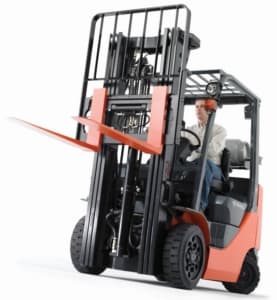
Can Hydraulic Cylinders be Used in Forklift Attachments?
Yes, hydraulic cylinders can be used in forklift attachments to enhance their functionality and expand their capabilities. Forklift attachments are auxiliary devices that can be mounted to the forks or carriage of a forklift to perform specific material handling tasks. The addition of hydraulic cylinders to these attachments offers several advantages and enables a wide range of applications. Here’s a detailed explanation of how hydraulic cylinders can be used in forklift attachments:
- Improved Lifting and Tilting:
- Extended Reach and Telescoping:
- Rotational Movement:
- Specialized Handling:
- Quick Attachment Changes:
Hydraulic cylinders can be incorporated into forklift attachments to provide enhanced lifting and tilting capabilities. For example, attachments such as fork positioners, side shifters, or paper roll clamps can utilize hydraulic cylinders to adjust the position of the forks or arms, allowing for efficient handling of different load sizes or configurations. The hydraulic cylinders enable precise control over the movement, enabling operators to lift, tilt, or adjust the position of the attachment as needed to optimize material handling operations.
Hydraulic cylinders can be employed in telescopic attachments for forklifts, enabling extended reach capabilities. Telescopic attachments consist of multiple sections that can be extended or retracted using hydraulic cylinders. By extending or retracting the sections, the attachment can reach deeper into racks, containers, or other storage areas, allowing forklifts to handle materials that are situated further away or at greater heights. This extension and retraction feature enhances the versatility of the forklift and enables efficient material handling in various environments.
Some forklift attachments, such as rotators or clamps, require rotational movement to handle loads effectively. Hydraulic cylinders can be integrated into these attachments to provide the necessary rotational capabilities. By utilizing hydraulic power, the attachment can rotate the load in either direction, allowing for precise positioning or transferring of goods. The inclusion of hydraulic cylinders enables controlled and smooth rotation, enhancing the efficiency and safety of material handling operations.
Hydraulic cylinders can be utilized in various specialized forklift attachments designed for specific material handling applications. Examples include attachments for handling drums, barrels, coils, or bales. These attachments often require unique lifting, clamping, or squeezing mechanisms, which can be achieved by incorporating hydraulic cylinders. The hydraulic cylinders provide the necessary force and control to handle specialized loads safely and efficiently, expanding the capabilities of the forklift in specific industries or tasks.
Hydraulic cylinders can facilitate quick and easy attachment changes on forklifts. Some forklifts are equipped with hydraulic quick-coupler systems that allow attachments to be rapidly connected or disconnected using hydraulic power. The hydraulic cylinders in the quick-coupler system enable a secure and efficient attachment change process, reducing downtime and improving productivity. This feature is particularly beneficial in applications where different attachments are frequently used, allowing forklifts to adapt to diverse material handling requirements swiftly.
The integration of hydraulic cylinders in forklift attachments provides numerous benefits, including improved lifting and tilting capabilities, extended reach and telescoping features, rotational movement, specialized handling options, and quick attachment changes. These advantages enhance the versatility, efficiency, and adaptability of forklifts, allowing them to handle a wide range of materials and perform specialized tasks in various industries.
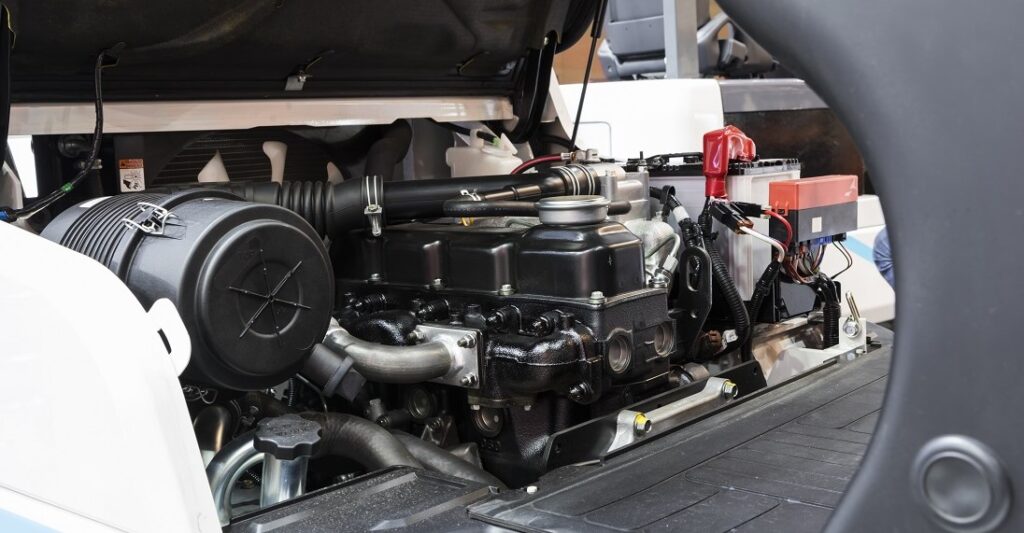
How does a forklift hydraulic cylinder contribute to smooth lifting and lowering?
A forklift hydraulic cylinder plays a crucial role in achieving smooth lifting and lowering operations. Here’s an explanation of how it contributes to this process:
The smooth lifting and lowering of a forklift’s load is made possible by the hydraulic cylinder working in tandem with the hydraulic system. The hydraulic cylinder contributes in the following ways:
1. Controlled Fluid Power:
The hydraulic cylinder utilizes controlled fluid power to lift and lower the load. When the operator activates the hydraulic system, hydraulic fluid is pumped into the cylinder, exerting pressure on the piston inside. This pressure creates a force that raises or lowers the load smoothly and evenly.
2. Piston and Cylinder Design:
The design of the hydraulic cylinder’s piston and cylinder bore contributes to smooth lifting and lowering. The piston is precisely machined to fit within the cylinder bore with minimal clearance. This tight fit, along with the use of seals and hydraulic fluid, helps minimize friction and ensure smooth movement of the piston within the cylinder.
3. Valve Control:
The hydraulic cylinder’s movement is controlled by valves in the hydraulic system. These valves regulate the flow of hydraulic fluid into and out of the cylinder. By adjusting the valve settings, the operator can control the speed and rate of lifting and lowering. The valves allow for precise control, enabling smooth and gradual movements of the load.
4. Load Balancing:
The hydraulic cylinder contributes to load balancing during lifting and lowering operations. By adjusting the extension or retraction of the cylinder, the operator can maintain a proper balance between the load and the forklift. This balance helps prevent sudden shifts or jerky movements, resulting in smoother and more stable lifting and lowering.
5. Damper Mechanisms:
In some forklift hydraulic systems, dampers or shock absorbers are incorporated to further enhance smooth lifting and lowering. These mechanisms help cushion the movements of the hydraulic cylinder, reducing any sudden jolts or vibrations. The dampers absorb and dissipate energy, resulting in smoother and more controlled load handling.
In summary, a forklift hydraulic cylinder contributes to smooth lifting and lowering operations through controlled fluid power, precise piston and cylinder design, valve control, load balancing, and the potential inclusion of dampers. These factors work together to provide operators with the ability to lift and lower loads smoothly, efficiently, and with enhanced control.
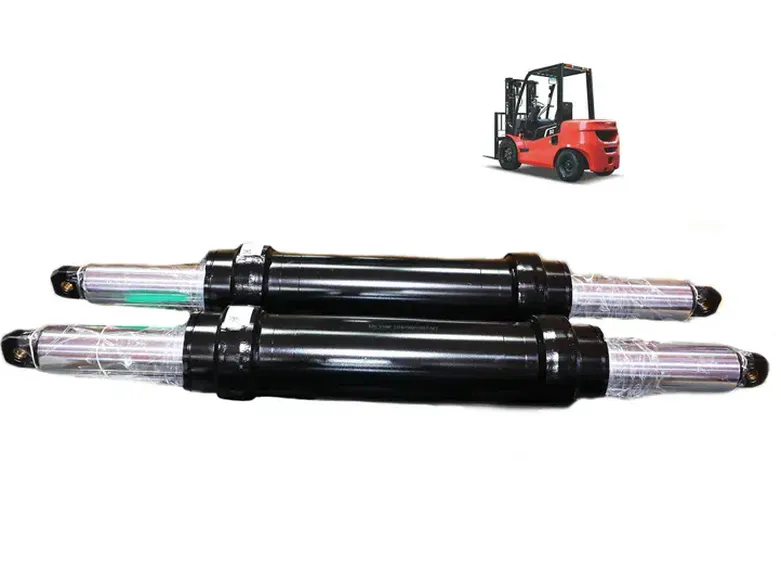
How Does a Forklift Hydraulic Cylinder Handle Variations in Load Weight?
A forklift hydraulic cylinder is designed to handle variations in load weight by utilizing the principles of hydraulic pressure and force. The hydraulic system of a forklift, including the hydraulic cylinder, employs a closed-loop system that allows for efficient and precise handling of different load weights. Here’s how a forklift hydraulic cylinder handles variations in load weight:
- Hydraulic Pressure:
- Force Balance:
- Load Sensing Valves:
- Controlled Lowering:
- Stability and Balance:
The hydraulic cylinder in a forklift operates based on the principle of hydraulic pressure. The forklift’s hydraulic system includes a hydraulic pump that pressurizes the hydraulic fluid, typically hydraulic oil. When the forklift operator activates the controls to lift a load, the pressurized hydraulic fluid is directed to the hydraulic cylinder. The high-pressure fluid exerts force on the piston inside the cylinder, creating an upward force that lifts the load.
The hydraulic cylinder is designed to maintain a force balance between the load weight and the hydraulic pressure. As the load weight increases, the hydraulic system compensates by adjusting the hydraulic pressure accordingly. The hydraulic pump supplies more pressurized fluid to the cylinder, allowing the cylinder to generate the required force to lift the heavier load. This force balance ensures that the forklift can handle variations in load weight effectively.
Modern forklifts often incorporate load sensing valves in their hydraulic systems to further optimize load handling. Load sensing valves continuously monitor the load weight and adjust the hydraulic pressure accordingly. These valves sense the force exerted on the hydraulic cylinder and regulate the pressure to match the load weight. When a heavier load is detected, the load sensing valve signals the hydraulic pump to increase the pressure, ensuring the necessary force is applied to lift the load safely and efficiently.
In addition to handling variations in load weight when lifting, forklift hydraulic cylinders also ensure controlled and safe lowering of the load. The hydraulic system uses various control valves and mechanisms to regulate the flow of hydraulic fluid during lowering. This allows for precise and gradual lowering of the load, regardless of its weight. The operator can control the descent speed using the forklift’s controls, ensuring smooth and safe handling of the load during the lowering process.
While the hydraulic cylinder plays a crucial role in handling variations in load weight, maintaining stability and balance is equally important. Forklifts are designed with a stable base and a counterweight at the rear to provide balance and prevent tipping. The hydraulic system, including the cylinder, works in conjunction with the forklift’s overall design to maintain stability and ensure safe operation, especially when dealing with uneven or shifting loads.
In summary, a forklift hydraulic cylinder handles variations in load weight by utilizing hydraulic pressure, force balance, load sensing valves, and controlled lowering mechanisms. These components and systems work together to ensure that the hydraulic cylinder can lift and lower loads of different weights safely and efficiently. The ability to adapt to varying load weights is essential for the versatility and effectiveness of forklifts in various material handling applications.


editor by CX 2023-12-26